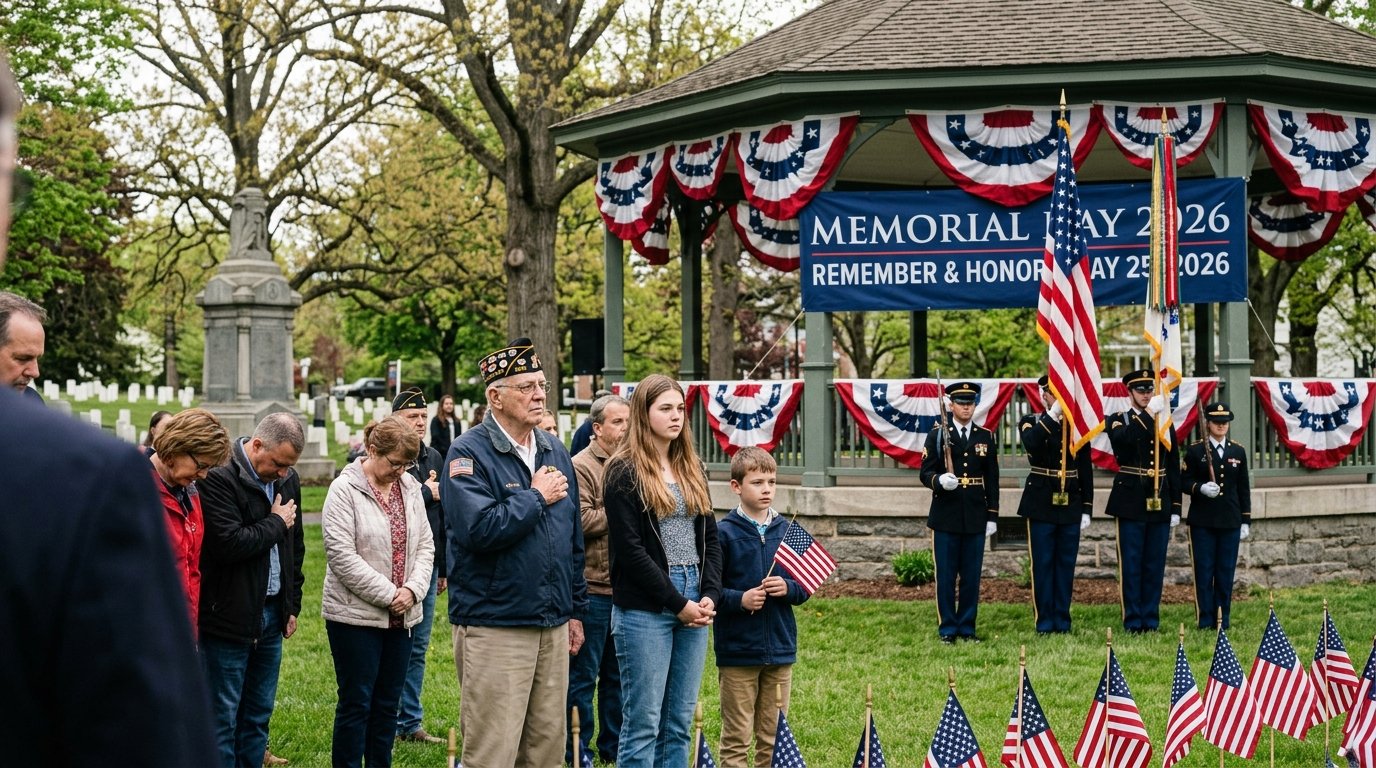
Memorial Day 2026: Date, History, Meaning and How to Observe
Memorial Day 2026 falls on Monday, May 25, 2026, in the United States. It is a federal holiday that honors American military members who died while serving their country. People mark the day by attending memorial services, visiting cemeteries, placing flowers on graves, and spending time remembering those who gave their lives in military service. Although many families also use the long weekend for travel, shopping, and outdoor activities, the main purpose of Memorial Day is remembrance.
The holiday takes place on the last Monday in May each year. In 2026, it creates a three-day weekend for many people, from Saturday, May 23, through Monday, May 25. Federal offices generally observe the holiday on Monday, but private businesses, schools, and other organizations may follow different schedules.
Understanding Memorial Day means looking beyond the date. Its history reaches back to the years after the American Civil War, and its meaning has grown to include fallen service members from later wars. Whether you plan to attend a public ceremony, visit a memorial, or pause quietly at home, there are many ways to take part in this important American observance.
When Is Memorial Day 2026?
Memorial Day 2026 is on Monday, May 25. The date follows the federal rule that sets Memorial Day on the last Monday of May.
Here are the key dates for the 2026 holiday weekend:
- Saturday, May 23: The weekend begins for people who have Saturdays off.
- Sunday, May 24: Families may attend local events, visit memorials, or watch national programs.
- Monday, May 25: Memorial Day is observed across the United States.
- Monday, May 25, at 3 p.m. local time: The National Moment of Remembrance invites people to pause and remember fallen service members.
The date changes each year because the holiday is tied to a day of the week rather than a fixed calendar date.
For example, Memorial Day fell on May 26 in 2025 and falls on May 25 in 2026. In 2027, it will fall on May 31.
This schedule helps people plan family gatherings, memorial visits, and trips while keeping the holiday on a Monday.
What Is Memorial Day?
Memorial Day is a national day of remembrance for U.S. military members who died while serving their country.
It honors people from different backgrounds, communities, and generations. Their service took place during different conflicts and periods of American history. The holiday gives the public a chance to remember their lives, recognize their sacrifice, and reflect on the cost of war.
Memorial Day is different from a general celebration of military service. Its main focus is on those who died in service, rather than all people who have served in the armed forces.
Families may use the day to remember relatives who never returned home. Communities may hold ceremonies at cemeteries, monuments, and town squares. Schools, museums, and historical sites may also share stories about military history.
There is no single way everyone must observe the day. Some people take part in formal events, while others choose a quiet moment of reflection. Both can provide an opportunity to remember the people the holiday honors.
Why Memorial Day Matters
Memorial Day connects personal loss with the wider history of the United States.
For some families, the day brings back memories of a parent, child, sibling, or other loved one who died during military service. For others, it is a chance to learn about people whose names appear on monuments or cemetery markers.
The holiday also reminds younger generations that military history is made up of real people, not only dates and battles. Each name represents a life, a family, and a community affected by loss.
Remembering fallen service members does not require a large event or an expensive trip. Reading a historical account, visiting a local memorial, or observing a moment of silence can help people understand the purpose of the day.
The History of Memorial Day
Memorial Day has roots in the years after the American Civil War, one of the deadliest conflicts in U.S. history. Many soldiers had died, and communities looked for ways to honor those who would never return home.
The early observance was known as Decoration Day. People placed flowers on the graves of fallen soldiers as a sign of respect. Over time, the custom spread to more towns and cities.
How Decoration Day Began
In 1868, John A. Logan, a leader of the Grand Army of the Republic, called for a national day to decorate the graves of soldiers who had died during the Civil War.
May 30 was selected for the observance. People gathered in cemeteries, placed flowers on graves, and took part in ceremonies to remember the dead.
The practice gave families and communities a shared way to mourn their losses. It also helped keep the memory of fallen soldiers alive after the war had ended.
Although early events focused mainly on Civil War soldiers, the meaning of the day later grew to include Americans who died in other wars.
From Decoration Day to Memorial Day
After World War I, the observance expanded to honor American military members who died in all wars, not only the Civil War.
The name Memorial Day became widely used, reflecting the wider purpose of the holiday.
In 1971, Memorial Day became an official federal holiday observed on the last Monday in May under the Uniform Monday Holiday Act. Moving it to a Monday gave many federal workers a regular three-day weekend.
The change also helped create a consistent date for public ceremonies and other activities across the country.
Today, Memorial Day remains connected to its original purpose: remembering people who died while serving in the U.S. armed forces.
Memorial Day vs. Veterans Day: What Is the Difference?
Memorial Day and Veterans Day both recognize military service, but they have different purposes.
Memorial Day honors military members who died while serving their country. Veterans Day, observed on November 11, honors military veterans who served in the U.S. armed forces.
This difference is important because the two holidays are not interchangeable.
Memorial Day focuses on loss, remembrance, and the lives of fallen service members. Veterans Day recognizes veterans from different periods of service, including those who are still living.
For example, visiting a military cemetery on Memorial Day is one way to remember people who died during service. Thanking a living veteran for their service can be a meaningful act on Veterans Day, although people may express appreciation at any time.
Both holidays offer a chance to learn about military history. However, understanding their separate meanings helps people observe each one with care.
How Is Memorial Day 2026 Observed?
Memorial Day is observed in many ways across the United States. Activities vary by city, state, community, and family.
Some events are formal and public. Others take place at home or in small local groups. The shared goal is to remember fallen service members and recognize their sacrifice.
1. Attend a Memorial Day Ceremony
Public ceremonies are held at national cemeteries, military memorials, parks, and other community locations.
Events may include speeches, wreath-laying, military honors, music, and moments of silence. Some ceremonies are led by veterans’ groups, local officials, military organizations, or cemetery staff.
The U.S. Department of Veterans Affairs listed public commemoration ceremonies at 131 national cemeteries for Memorial Day 2026.
If you plan to attend an event, check the organizer’s current details before leaving home. Weather, security needs, and other conditions may affect the time or location.
Attending a ceremony can help visitors learn about local military history and take part in a shared act of remembrance.
2. Visit a Cemetery or Memorial
Many people visit the graves of relatives or other fallen service members on Memorial Day.
They may place flowers, leave a small tribute, or spend time reading the names on cemetery markers. Others visit memorial walls and monuments that honor people who died in military service.
If you visit a cemetery, follow its rules. Keep paths clear, respect other visitors, and avoid moving flags or decorations placed by other families.
You do not need to know someone personally to honor their memory. A quiet visit to a public memorial can also be a meaningful way to observe the holiday.
3. Observe the National Moment of Remembrance
The National Moment of Remembrance takes place at 3 p.m. local time on Memorial Day.
The observance encourages Americans to pause briefly and remember those who died while serving in the military.
You can take part wherever you are. You might stop a task, sit quietly, reflect on a family member, or think about the lives represented by names on a memorial.
The moment does not require special clothing, travel, or a public event. Its value comes from taking a short break from everyday activities to remember the purpose of the holiday.
4. Learn About Fallen Service Members
Learning about military history is another way to observe Memorial Day.
You could read about a historical conflict, explore a local war memorial, or learn about someone whose name appears on a memorial wall.
Families can also share stories about relatives who served in the armed forces. Older family members may have photographs, letters, or records that help younger relatives understand the past.
When researching an individual, use reliable historical records and be careful not to confuse people with similar names.
Learning about a person’s life can help make history more personal. It also gives children and students a better understanding of why the holiday exists.
5. Support Military Families and Veterans’ Groups
Some people use Memorial Day as an opportunity to support organizations that help military families and veterans.
You may choose to volunteer, attend a community event, or make a donation to a group whose work you have checked.
It is important to understand that Memorial Day focuses on people who died in service. Supporting living veterans and their families is valuable, but it does not replace the holiday’s central purpose of remembering the fallen.
If you plan to donate, check the organization’s official website and understand how it uses donations before sending money.
6. Watch a Memorial Day Program
People who cannot attend a public ceremony may choose to watch a televised or online remembrance program.
National programs can include music, historical stories, tributes, and messages about military service and sacrifice.
Before watching, check the date, broadcast time, and local availability. Programs may change from year to year.
A recorded ceremony can also be useful for students who want to learn about the holiday after the weekend has passed.
7. Share a Respectful Memorial Day Message
A short message can help remind friends and family of the meaning of Memorial Day.
For example:
“On Memorial Day, we remember the brave men and women who lost their lives while serving our country. Their sacrifice will not be forgotten.”
You can share a message privately or post it online. If you include a photograph or story about a fallen service member, make sure the information is correct and that you have permission to share private family details.
A respectful message should focus on remembrance rather than treating the day only as a celebration or shopping event.
Memorial Day 2026 Events and Places to Visit
People looking for Memorial Day events can begin with official local and national sources.
The right choice depends on where you live, how far you can travel, and whether you prefer a formal ceremony or a quiet visit.
National Cemeteries
National cemeteries are important places of remembrance. Many hold Memorial Day ceremonies that are open to the public.
The National Cemetery Administration publishes event information, including locations, dates, and local start times. Its 2026 event listing included ceremonies on Memorial Day itself and during the surrounding weekend.
Before visiting, check:
- The ceremony’s date and starting time.
- Whether public entry is allowed.
- Parking and traffic arrangements.
- Any security checks or restrictions.
- Rules about flowers, flags, and other decorations.
- Whether weather may change the event.
Do not assume every cemetery holds its ceremony at the same time. Each location may follow its own schedule.
National Memorials in Washington, D.C.
Washington, D.C., has several memorials connected to American military history. Visitors can use Memorial Day weekend to learn about the people and events they represent.
The National Mall includes memorials that honor service members from different wars. These places can help visitors understand the human cost of conflict and the stories behind the names displayed there.
Some events may require registration or security screening. Travel plans should allow time for walking, waiting, and reaching the correct entrance.
If you cannot travel to Washington, D.C., local museums and monuments may offer similar chances to learn about military history closer to home.
Local Community Events
Many communities organize their own Memorial Day activities. These may include parades, cemetery visits, short ceremonies, or gatherings at local monuments.
To find an event, check your city or county website, local government announcements, public library listings, or the official pages of veterans’ organizations.
Confirm the event directly with its organizer. A listing from a previous year may no longer be accurate.
If a ceremony is outdoors, consider the weather and bring water if needed. Follow event staff instructions and be mindful of people attending to remember loved ones.
Is Memorial Day a Federal Holiday?
Yes. Memorial Day is a federal holiday in the United States.
Federal holiday status affects many government offices and public services, but it does not mean every business closes.
Here is what people should know when planning for Monday, May 25, 2026.
Government Offices
Many federal offices close for Memorial Day. State and local government offices may also close, although schedules can differ.
If you need to visit an office, check its official website before making the trip. Some public services may have different hours or online options.
Banks and Financial Services
Many banks close their branches on federal holidays. However, online banking, automated services, and some financial transactions may remain available.
Processing times can change around a holiday. A transfer or payment that normally takes one business day may take longer if a bank or payment network is closed.
Check with your bank if a payment must arrive by a specific date.
Post Offices and Mail Delivery
Regular U.S. Postal Service delivery generally does not operate on Memorial Day, and post office locations are generally closed.
However, delivery services and special arrangements may differ by provider. If you are expecting an important package, check the carrier’s official tracking information.
Schools and Colleges
Many schools and colleges are closed on Memorial Day because it falls near the end of the academic year for many U.S. institutions.
Still, school calendars vary. Summer classes, exams, and special programs may follow separate schedules.
Students should check their institution’s calendar rather than assuming every class or campus service is closed.
Stores, Restaurants, and Shopping Centers
Many retail stores, restaurants, and shopping centers remain open on Memorial Day.
Some businesses offer holiday sales, while others use shorter hours or close for the day. There is no single schedule for all private businesses.
If you plan to shop or eat out, check the specific business’s hours before visiting.
Memorial Day 2026 Travel and Weekend Planning
Memorial Day weekend is a common time for short trips, family gatherings, and outdoor activities in the United States.
Because many people have Monday off, roads and popular destinations may be busy. Planning ahead can make the weekend easier, especially if you are attending a ceremony or visiting a cemetery.
Plan Your Route Early
If you need to drive to an event, check your route before leaving.
Look for road closures, construction, parking limits, and traffic updates. Allow extra time if you are visiting a large memorial or an event with security checks.
For a long drive, plan rest breaks and avoid rushing to meet a ceremony’s starting time.
Check Weather Conditions
Late May weather can vary across the United States. Some areas may be warm, while others may experience rain or changing temperatures.
Check the forecast for your destination, not just your home town. Bring clothing suitable for the conditions and prepare for outdoor waiting if necessary.
If severe weather is expected, check for official event updates before travelling.
Make Reservations When Needed
Hotels, campsites, and other travel services may have limited availability during a holiday weekend.
If your trip requires overnight accommodation, review the cancellation rules and total cost before booking.
For outdoor activities, check whether you need a reservation or entry pass. Some parks and attractions have special rules even when general entry is free.
Keep the Purpose of the Holiday in Mind
There is nothing unusual about spending Memorial Day weekend with family or enjoying outdoor activities.
The important distinction is between the weekend’s leisure activities and the reason for the holiday. You can enjoy time with loved ones while also setting aside a moment to remember fallen service members.
A short pause at 3 p.m. on Monday is one simple way to include remembrance in your plans.
Memorial Day Sales and Shopping: What Should You Know?
Memorial Day is also linked with seasonal sales in the United States.
Retailers may advertise discounts on items such as furniture, mattresses, clothing, home goods, and outdoor equipment. However, the products, prices, and length of each promotion depend on the seller.
There is no rule that every store must offer a Memorial Day sale.
Check the Final Price
An advertised discount does not always mean an item is the cheapest option available.
Compare the final price with other sellers and include delivery fees, taxes, and other charges. Check whether the offer requires a coupon, membership, or special payment method.
If an item is expensive, read the return policy and warranty details before buying it.
Read Sale Dates Carefully
Some retailers start their Memorial Day promotions before the weekend. Others end them on Monday or extend them for a few more days.
A sale advertised for Memorial Day 2026 may now be over. Since the holiday has passed, current prices should be checked directly rather than relying on old promotional pages.
Do not assume a discount from a previous year will return at the same price.
Remember That Shopping Is Not the Main Purpose
Shopping can be part of a holiday weekend, but it is not what Memorial Day was created to celebrate.
The holiday began as a way to honor people who died in military service. Understanding that history helps keep its meaning clear even when advertisements focus on discounts and special offers.
How Families Can Teach Children About Memorial Day
Memorial Day can be an opportunity to help children understand history, loss, service, and remembrance in a way that fits their age.
You do not need to give a long history lesson. Simple activities can help children learn why the day matters.
Explain the Meaning in Simple Words
Tell children that Memorial Day is a day to remember people who died while serving in the U.S. military.
Explain that these people had families, friends, and lives outside their military work. The holiday gives the country a time to remember them.
For younger children, keep the explanation short and answer questions honestly.
Read a History Book Together
Choose an age-appropriate book about American history or a person who served in the military.
Discuss what the child learned and why people preserve memories of the past. If the book describes a war, explain difficult topics in a calm way without giving more detail than the child needs.
Visit a Local Memorial
A visit to a local monument can make the holiday more meaningful.
Help children read the names and dates displayed there. Explain that memorials preserve memories for people who may not have known those who died.
Follow any rules about touching displays, placing flowers, or taking photographs.
Take Part in a Moment of Silence
At 3 p.m. on Memorial Day, families can pause together for a short moment of silence.
Children can use that time to think about the people being remembered or listen to a brief explanation of the holiday.
The goal is not to make the activity complicated. It is to build an understanding of why the day is set aside.
Common Memorial Day Mistakes to Avoid
A few simple points can help people observe the holiday accurately and respectfully.
Confusing Memorial Day With Veterans Day
Memorial Day honors military members who died while serving. Veterans Day honors military veterans more broadly.
Remembering this difference helps people choose words and activities that fit the holiday.
Assuming All Businesses Are Closed
Federal holiday status does not require every private business to close. Stores, restaurants, and other services may remain open.
Check opening hours before making plans.
Relying on Old Event Listings
Ceremony details can change. A page from a previous year may show a time or location that no longer applies.
Use the current information from the event organizer, cemetery, or government website.
Treating the Weekend Only as a Shopping Event
Memorial Day sales are common, but the holiday’s central purpose is remembrance.
You can enjoy the long weekend while still taking a few minutes to reflect on those who died in military service.
Sharing Unverified Stories
A photograph or story about a fallen service member should be accurate. If you are unsure about a name, date, unit, or event, check a reliable record before sharing it.
Careful research helps preserve the person’s memory without spreading incorrect details.
What date is Memorial Day 2026?
Memorial Day 2026 falls on Monday, May 25, in the United States. It is observed on the last Monday in May each year.
Why do Americans celebrate Memorial Day?
Americans observe Memorial Day to honor U.S. military members who died while serving their country. People attend ceremonies, visit memorials, and take time to remember the fallen.
Is Memorial Day always on the last Monday in May?
Yes. Federal law designates the last Monday in May as Memorial Day. Because the date follows the weekday, the calendar date changes each year.
What time is the National Moment of Remembrance?
The National Moment of Remembrance takes place at 3 p.m. local time on Memorial Day. People are encouraged to pause briefly and remember those who died in military service.
Are banks and post offices open on Memorial Day 2026?
Many bank branches and U.S. post offices are closed on Memorial Day. Regular mail delivery generally does not operate. Check with the specific bank, postal service, or delivery company for details.
What is the difference between Memorial Day and Veterans Day?
Memorial Day honors military members who died while serving. Veterans Day, observed on November 11, recognizes military veterans who served in the U.S. armed forces.
What are some respectful ways to observe Memorial Day at home?
You can learn about a fallen service member, read about military history, share a respectful message, or observe the National Moment of Remembrance at 3 p.m. local time. You do not need to attend a public event to take part.
Are Memorial Day events free?
Some public ceremonies are free, but entry rules and costs vary by location. Check the event organizer’s official information before travelling.
Conclusion
Memorial Day 2026 was observed on Monday, May 25, giving Americans a day to honor military members who died while serving their country. Its roots date back to Decoration Day in 1868, and its meaning has grown to include fallen service members from all wars.
People can observe Memorial Day by attending a ceremony, visiting a cemetery, learning about military history, or pausing for the National Moment of Remembrance at 3 p.m. local time. Families may also travel, gather outdoors, or shop during the long weekend, but remembrance remains at the heart of the holiday.
Although Memorial Day 2026 has passed, its history and meaning remain relevant. Taking time to learn about the people being honored helps keep their memories alive for future generations.