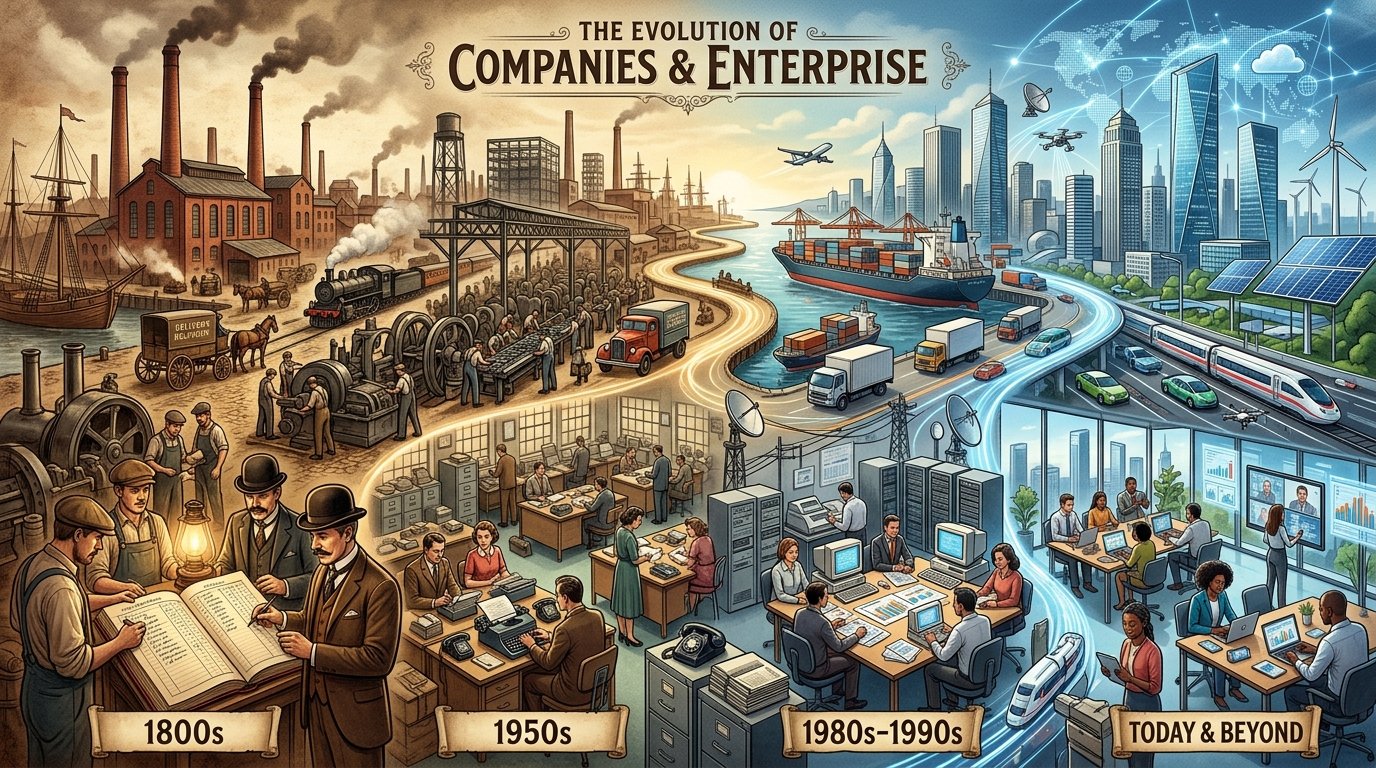
Companies History: How Businesses Began and Evolved
Companies history helps us understand how businesses start, grow, face problems, and change over time. It explains who founded a company, what it first sold, how it found customers, and why it became successful or failed. In the United States, company history also shows how new inventions, changing customer needs, laws, and economic events shaped modern business. Whether you are researching an old American company, studying famous brands, or learning how businesses grow, understanding their past can help you see how they work today.
A company’s story is more than its founding date. It includes the people behind it, the products it made, the choices its leaders took, and the events that changed its future. Some companies grow from small family shops into large businesses. Others become successful for a time and then close, merge with another company, or change their name.
Learning about company history can help students, business owners, researchers, investors, and curious readers understand these changes. It can also show why some businesses last for hundreds of years while others disappear after only a short time.
What Does Companies History Mean?
Companies history is the study of how individual businesses begin, develop, and change over time. It looks at the past of a business, from its earliest days to its later growth, changes in ownership, and present or final status.
For example, the history of a clothing company may explain how its founder started making clothes, found its first customers, opened new stores, and began selling products across the country.
The history of a technology company may focus on its first invention, the launch of new products, changes in leadership, and its move into new markets.
A company history often covers these main areas:
- Founding: When, where, and why the business began.
- Founders: The people who created or helped establish the company.
- Early products: The goods or services the business first offered.
- Growth: How it gained customers, hired workers, or entered new markets.
- Major events: Important launches, mergers, financial problems, or changes in ownership.
- Challenges: Problems caused by competition, new technology, economic changes, or poor decisions.
- Current status: Whether the company remains independent, operates under a new owner, or has closed.
These details help explain how a business reached its current position.
Company history is also connected to business history, but the terms are not exactly the same. Business history studies the wider development of companies, industries, business methods, and their effects on society. Company history focuses more closely on one particular business.
Both subjects help explain how commerce has changed over time.
Why Is Company History Important?
Company history is useful because it provides a clearer picture of how businesses work. A company may look successful today, but its past can reveal the choices and conditions that helped it grow.
It can also explain why a well-known brand changed its products, entered a new market, or lost customers.
1. It explains how a company started
Every company has an origin, although the details can vary. Some begin with a single founder and a small amount of money. Others grow out of an existing business, a family partnership, or a group of inventors.
Knowing how a company started helps readers understand the problem it wanted to solve.
A business that began by making affordable household goods, for example, may have built its early success by serving customers who could not afford expensive products.
2. It shows how businesses grow
A company’s early success does not always mean it will become a large business. Growth often depends on product quality, customer trust, good management, access to money, and the ability to meet changing needs.
Company history can show when a business opened its first store, hired more workers, began selling across state lines, or started serving customers in other countries.
These milestones help explain the steps between a small business and a large company.
3. It helps explain business failures
Companies can fail for many reasons. They may lose customers, carry too much debt, face stronger competitors, or fail to adapt to new technology.
A company’s past can show where problems began and how leaders responded.
However, history rarely provides one simple answer. A business may face several problems at once, and different people may disagree about which problem mattered most.
4. It helps people understand familiar brands
Many well-known American brands have changed greatly since their early years. They may have introduced new products, changed their names, entered new markets, or moved away from their original business.
Learning about these changes helps customers understand why a company sells what it does today.
It also shows that a brand name can remain familiar even when the business behind it changes.
5. It preserves business knowledge
Old company records can contain information about products, workers, prices, advertising, and daily business life.
Researchers can use these records to study how people worked, what customers bought, and how industries developed.
This information can be useful for students, historians, business owners, and future leaders who want to understand past decisions.
A Brief History of American Companies
American companies developed through many stages. Changes in transport, machines, communication, laws, and customer needs helped shape the way businesses operate today.
There was no single path that every company followed. A small store, a railroad company, a bank, and a software business each faced different opportunities and risks.
1. Business in Colonial America
Before the United States became an independent country, many businesses served local communities. Shops, farms, workshops, shipping firms, and trading businesses helped people buy and sell goods.
Some merchants traded goods across long distances. Other businesses supplied food, clothing, tools, and building materials to nearby customers.
Business ownership was often small in scale. A family might run a shop, while a group of partners could own a trading business or workshop.
Trade also formed part of a much wider Atlantic economy. This economy included forced labor and slavery, which created lasting harm and helped produce wealth for some merchants and business owners.
The colonial period matters because it shows that American business did not begin with modern factories. It grew from local trade, farming, craft work, shipping, and connections with other markets.
2. The Early 1800s: Local Businesses and New Markets
During the early 19th century, many American businesses remained small and served nearby customers.
A local shop might sell food and household goods. A craft worker could make furniture, shoes, or metal tools. Farms supplied food and raw materials to other businesses.
Transport was a major limit on growth. Moving heavy goods over long distances could take a great deal of time and money.
Roads, canals, and later railroads helped reduce these limits. Businesses could reach more customers and move materials to factories more easily.
As markets grew, some companies began to make more goods in larger amounts. This helped create new ways to organize production, sell products, and manage workers.
3. The Industrial Age and the Rise of Big Business
The period after the Civil War brought major changes to American business. From the late 19th century into the early 20th century, railroads, steel production, oil refining, electric power, and new communication systems helped businesses grow.
Railroads connected distant places and made it easier to ship goods. Factories could produce items in large amounts, while growing cities created more customers.
Companies such as Standard Oil and U.S. Steel became important examples of large industrial businesses. Their histories show how companies could expand through control of production, investment, and business combinations.
Large companies also created new challenges. They could gain strong market power, influence working conditions, and affect the choices available to customers.
These changes led to debates about fair competition and the role of government. Antitrust laws and other rules became important parts of the American business system.
This period also changed company management. As businesses grew, owners could no longer handle every task themselves. They needed managers, accountants, sales teams, and systems to coordinate work across many locations.
4. Companies in the Early and Mid-1900s
During the 20th century, American companies expanded in manufacturing, transport, retail, banking, communications, and many other fields.
Cars, household appliances, packaged food, and other mass-market products became important parts of business life. Some companies built large factories and distribution networks to serve customers across the country.
Advertising also became a major way to reach buyers. Businesses used newspapers, radio, and later television to introduce products and build brand recognition.
World War I and World War II changed business activity in different ways. Companies supplied goods and equipment needed for the wars, while wartime demands affected materials, production, and labor.
After World War II, many businesses benefited from growing consumer demand and the spread of new products. Shopping centers, national retailers, and large manufacturing firms became more common parts of daily life.
Not every company benefited equally. Some industries faced changing costs, new competition, or shifts in what customers wanted.
Company history from this period often focuses on factory growth, brand building, labor relations, new products, and changes in consumer habits.
5. The Computer Age
Computers changed how companies stored information, handled payments, managed stock, and communicated with customers.
Early computer systems were costly and often used by large organizations. Over time, computers became smaller, more widely available, and easier for businesses of different sizes to use.
Technology companies developed hardware, software, computer networks, and related services. Other businesses adopted these tools to improve their own work.
A retailer, for example, could use a computer system to track sales and stock. A bank could process information more quickly. A factory could use computer-controlled equipment to support production.
These changes also created new risks. Companies had to protect data, train workers, and keep their systems working as technology changed.
The computer age shows why company history must include more than founding stories. A business may change its entire way of working because of a new technology.
6. The Internet and the Digital Economy
The spread of the internet created new ways for companies to reach customers.
Businesses could sell goods online, offer digital services, and communicate with buyers without relying only on physical stores. Online marketplaces made it easier for some small businesses to reach customers in distant places.
Digital companies also created new business models. Some earn money by selling products, while others charge subscriptions, take fees from transactions, or sell advertising.
The internet did not remove all business challenges. Companies still need customers, reliable products, sound finances, and effective management. They must also consider privacy, online security, competition, and changing laws.
Today, many companies combine older business methods with digital tools. A store may sell products both in person and online, while a manufacturer may use software to plan production and deliveries.
7. Companies in the Modern Era
Modern companies operate in a world shaped by global trade, rapid communication, changing customer needs, and new technology.
Some businesses operate in many countries. Others focus on a small local market or serve a narrow group of customers.
Companies may use data to understand buying patterns, improve service, and plan stock. Artificial intelligence and automation can support certain tasks, but their usefulness depends on the job, the quality of the data, cost, and human oversight.
Environmental concerns and social expectations also influence business decisions. Some companies change packaging, energy use, supply chains, or production methods in response to customer demand, rules, or business goals.
Modern company history is still being written. A new product or business strategy may look successful today but have a different result several years later. It is often too early to know the full effect of recent decisions.
Famous American Companies and Their Historical Stories
Looking at individual businesses makes company history easier to understand. The following examples show different ways companies have begun, grown, and changed.
Coca-Cola: From a Drink to a Global Brand
Coca-Cola began in Atlanta, Georgia, in 1886. Pharmacist John S. Pemberton created the drink, and it was first sold at a local soda fountain.
The business grew through marketing, distribution, and the development of a recognizable brand. Bottling and wider distribution helped make the drink available to customers in many places.
Its history shows that creating a product is only one part of building a large company. A business must also find ways to produce, distribute, and market its product.
Coca-Cola’s story also shows how brand identity can become a major part of a company’s value. Customers may recognize a product by its name, packaging, and advertising even when they have never visited the business that produces it.
Ford Motor Company: Changing Car Production
Ford Motor Company was founded in 1903 by Henry Ford and other investors.
The company became strongly associated with the Model T, introduced in 1908. Ford later expanded the use of moving assembly lines in automobile production. These methods helped the company produce vehicles in large amounts.
The wider lesson is that a company’s success may depend on how it makes and delivers a product, not only on the product itself.
Ford’s history also includes changes in competition, customer preferences, technology, and the cost of manufacturing. Its story demonstrates why even a major industrial company must continue to adapt.
Amazon: From Online Bookselling to a Broad Business
Amazon was founded by Jeff Bezos in 1994 and began as an online bookseller.
The business later expanded into many product categories and services. Its development included online retail, delivery networks, digital services, and cloud computing.
This history illustrates how a company can begin with a narrow offer and expand into related areas over time.
Expansion, however, brings difficult choices. A larger company must manage more workers, systems, customers, costs, and business risks. Growth alone does not prove that every new activity will succeed.
Apple: Products, Design, and Technology
Apple was founded in 1976 by Steve Jobs, Steve Wozniak, and Ronald Wayne.
The company first became known for personal computers. Over time, it expanded into other products and services, including smartphones and digital services.
Apple’s history includes periods of growth, leadership changes, product launches, and changes in its business direction.
Its development shows that companies can change their position in a market by creating new products and building connections between them. It also shows why timing, customer needs, product design, and competition matter.
What These Company Histories Have in Common
These examples come from different industries, but they reveal several shared lessons.
First, a company usually needs a clear product or service that customers want. Second, reaching more customers often requires better production, distribution, marketing, or technology. Third, businesses must respond to change if they want to remain competitive.
The examples also show that companies do not all grow in the same way. Some focus on one product, while others expand into many related areas. Their success depends on their own market, choices, resources, and conditions.
A famous company can offer useful lessons, but its history should not be treated as a guaranteed plan for every new business.
What Information Is Included in a Company History?
A useful company history explains more than when a business opened. It connects important events and shows how one change led to another.
Founding date and original business
The founding date is often the first detail readers want to know. It helps place the company in its historical period.
However, the date needs careful checking. A company may have started selling products before it was legally registered. It may also have grown from an older business or changed its legal structure later.
For example, a store may have opened in 1950, while the corporation that owns it today was formed in 1965. Both dates can be correct, but they describe different events.
A good company history explains which date it uses and why.
Founders and early leaders
Founders help explain how a business began. Their skills, ideas, money, and relationships may have shaped its early direction.
Some companies have one main founder. Others were started by several partners or developed from an existing organization.
Research should distinguish between a person who created the first product, a person who founded the legal company, and a person who later made it successful. These roles are not always held by the same individual.
Products and services
A company’s first product may differ greatly from what it sells today.
Some businesses add new products to meet customer needs. Others stop selling older products when demand falls or production becomes too costly.
Tracking these changes helps explain how a company responds to its market.
Ownership and leadership changes
Companies can change ownership through a sale, merger, acquisition, or transfer to family members.
They may also appoint new chief executives or change their board of directors.
These changes can affect business plans, workers, products, and company identity. However, a leadership change does not always mean the company has become a new legal business.
Major milestones
Milestones are important events in a company’s development. They may include opening a factory, launching a major product, entering a new country, becoming publicly traded, or buying another business.
A strong history explains why each milestone mattered instead of simply listing dates.
Financial and business challenges
A company’s history may include falling sales, debt, legal disputes, worker strikes, product recalls, or bankruptcy.
These events should be explained with care. A financial problem may have several causes, and an announcement about possible changes is not the same as a completed event.
Using dates and reliable records helps prevent mistakes.
How to Research a Company’s History
Researching a company’s past can be simple when information is easy to find. Older companies, private businesses, and companies that have closed may require more work.
The best approach is to collect information from different types of records and compare them.
Step 1: Identify the correct company
Start by confirming the company’s full name and industry.
Some businesses share similar names. Others have changed names or operate through a parent company.
Record details such as:
- Full legal name, if available.
- Common business name.
- Main industry.
- Original location.
- Founders or early owners.
- Former names.
- Known parent or successor companies.
These details help prevent confusion between businesses with similar names.
Step 2: Check the company’s official history
Many companies publish a timeline or a page about their founders and major events.
This is a useful starting point because it can provide the company’s own account of its development.
However, an official history may focus on positive achievements. It may leave out disputes, failed products, layoffs, or other difficult events.
Use it as one source, not the only source.
Step 3: Look for government records
Government records can help confirm when a company was registered, whether it changed its legal name, and whether it filed certain documents.
In the United States, state business registration records can be useful for corporations and limited liability companies.
For publicly traded companies, records filed with the Securities and Exchange Commission can provide details about ownership, operations, financial performance, and major business events.
The information available depends on the company type and the period being studied. Private companies generally disclose less financial information than public companies.
Step 4: Find old annual reports
An annual report describes a company’s business and performance during a particular year. Reports may include financial results, business risks, management discussions, and major developments.
Comparing reports from different years can show how a company’s priorities changed.
For example, one report may describe a plan to expand into a new market. A later report may explain whether the business completed the expansion or faced difficulties.
Annual reports are especially useful for researching publicly traded companies, although older records may be harder to access.
Step 5: Search newspapers and historical records
Newspaper articles can reveal events that a company history does not explain in detail.
They may report factory openings, new products, labor disputes, lawsuits, business sales, and financial problems.
Libraries and archives can also hold old advertisements, photographs, business directories, letters, and company documents.
For older American businesses, historical collections maintained by libraries and archives can be valuable. Some materials may be available online, while others may require a visit or a special request.
Step 6: Compare dates and facts
Do not assume that the first result in a search is correct.
A company profile may give the date it was incorporated, while an official timeline gives the date its founders began operating.
Both dates may be accurate.
When records disagree, identify what each date represents. If the evidence does not settle the issue, explain the uncertainty instead of choosing a date without a reason.
Step 7: Build a timeline
Once the key information is collected, place the events in date order.
A simple timeline might include the founding, first major product, opening of a new location, change of ownership, entry into a new market, and current status.
Then explain the most important connections between those events.
A timeline is more useful when it shows how the company developed rather than acting as a list of unrelated dates.
Best Places to Find Historical Company Information
Different sources answer different questions. No single source contains the complete history of every business.
| Source type | What it can help you find | Main limitation |
|---|---|---|
| Official company records | Founding story, products, leadership, milestones | May focus on positive events |
| State business records | Registration, legal name, status, and some ownership details | Coverage varies by state and record type |
| SEC filings | Public-company finances, risks, leadership, and major events | Usually less useful for private companies |
| Annual reports | Business performance and changing plans | Older reports may be difficult to access |
| Newspaper archives | News, disputes, openings, and public reactions | Reports may contain errors or incomplete details |
| Libraries and archives | Old directories, letters, photographs, and documents | Some records may require special access |
| Business history books | Wider context and detailed company stories | Check the author’s evidence and publication date |
For American company research, the Library of Congress is a useful starting point for locating historical business resources. Its research guides cover both active companies and businesses that no longer operate.
The key is to match the source to the question. A state registration record may confirm a legal date, while an old newspaper may help explain why a factory closed.
How to Tell Whether a Company History Is Accurate
Company history can be affected by poor research, outdated information, marketing, and confusion between different businesses.
Use the following checks before accepting a claim.
Check the original evidence
If a company says it was founded in a certain year, look for records that support the claim.
An official timeline is useful, but older documents, historical directories, or legal records may provide additional evidence.
Separate facts from opinions
A fact might be that a company opened a factory in a particular year.
An opinion might be that the factory was the most important reason for the company’s success.
The second statement needs an explanation and supporting evidence. It should not be presented as an established fact merely because it sounds reasonable.
Check whether the company still exists
A company may still have an active brand even if the original business has been sold or reorganized.
A business can also stop trading while its legal entity remains registered for a time.
Before describing a company as active or closed, check the relevant business records and recent reliable information.
Use more than one independent source
Important claims should be checked against other records when possible.
For example, if a company says it introduced a product in a certain year, a dated advertisement or contemporary news report may help confirm the timing.
Independent sources are particularly useful when researching controversies, financial problems, or claims about why a company succeeded or failed.
Watch for confusing founding dates
This is one of the most common problems in company research.
A brand may trace its origins to an early shop, while its current owner may have been established much later. A merger may also bring several older businesses together.
Explain the connection clearly so readers do not mistake the age of a brand for the age of its current legal owner.
How Company History Helps Students and Business Owners
Company history is useful beyond school assignments. It can help people understand business choices and make better decisions.
For students
Students can use company histories to study entrepreneurship, industrial growth, technology, leadership, and economic change.
A good school project should identify the company, explain its founding, describe its main milestones, and show how it changed over time.
Students should avoid copying a company’s official story word for word. It is better to compare records and explain the findings in their own words.
For entrepreneurs
Business owners can study how companies found customers, developed products, and responded to competition.
For example, the history of a local retailer may show how it built customer loyalty. A manufacturing company’s history may show why it invested in better equipment.
These examples can offer ideas, but the conditions may be different today. A strategy that worked in the past may not work in a different market.
For investors
Company history can help investors understand a business’s past decisions, changes in leadership, and response to difficult periods.
Historical financial reports may reveal patterns in spending, debt, acquisitions, or product development.
Still, past results do not guarantee future performance. Investors should consider current financial information, risks, competition, and their own financial needs rather than relying on a company’s story alone.
For writers and researchers
Journalists, historians, and content writers can use company histories to explain how an industry developed or why a business changed.
Accurate dates and clear context make these accounts more useful. Writers should also avoid treating a company’s own marketing material as a complete and independent account of its past.
Common Mistakes When Researching Company History
A few simple mistakes can make an otherwise useful company history unreliable.
Using only the company website: Official information may be correct, but it can leave out important problems or disagreements. Compare it with other records.
Confusing a founder with an owner: The person who started a company may not own or manage it today. Explain changes in ownership and leadership.
Treating a merger as a simple founding event: A company may combine several older businesses. Its present identity may have a complex history.
Using outdated information: A business described as active in an old article may have since closed, merged, or changed owners. Check recent records for current status.
Assuming growth means success in every area: A company may increase sales while facing debt, legal problems, or worker concerns. Different measures tell different parts of the story.
Leaving out wider events: Wars, recessions, new laws, inventions, and changes in customer behavior can affect company development. Include wider events when they help explain what happened.
Making unsupported claims about failure: It is easy to blame a company’s closure on one leader or one decision. A reliable account examines the available evidence and recognizes that several factors may have contributed.
What is the meaning of companies history?
Companies history is the study of how businesses began, developed, and changed over time. It covers founders, products, ownership, important events, growth, challenges, and the company’s current or final status.
Where can I find the history of an American company?
Start with the company’s official history and then check government business records, annual reports, historical newspapers, library collections, and other reliable records. The best sources depend on the company’s age and whether it is public or privately owned.
How do I find out when a company was founded?
Look for the company’s official founding date, early business records, historical directories, and registration documents. Check whether the date refers to the start of trading, legal registration, or the creation of the current company.
What is the difference between company history and business history?
Company history focuses on the development of one business. Business history studies wider topics, such as industries, business methods, economic changes, and the relationship between companies and society.
Can I research a company that has closed?
Yes. Historical newspapers, business directories, government records, old advertisements, annual reports, and library archives may provide useful details. The amount of available information depends on how long the business operated and which records survived.
Why do companies change their names or owners?
Companies may change names to reflect new products, markets, or ownership. They may be sold, merge with another business, or reorganize their legal structure. The reason should be confirmed through reliable records rather than assumed from the name change alone.
Conclusion
Companies history explains how businesses begin, grow, change, and sometimes close. It connects founders and early products with later milestones, ownership changes, technology, competition, and wider economic events.
For readers researching American companies, the best approach is to confirm the company’s identity, compare reliable records, check important dates, and separate facts from opinions. Official histories, government filings, annual reports, newspapers, and archives can each provide valuable information.
Most importantly, a useful company history does more than list dates. It explains why important events mattered and how they shaped the business. By understanding those changes, students, entrepreneurs, investors, and general readers can gain a clearer view of how companies work and how American business has evolved.