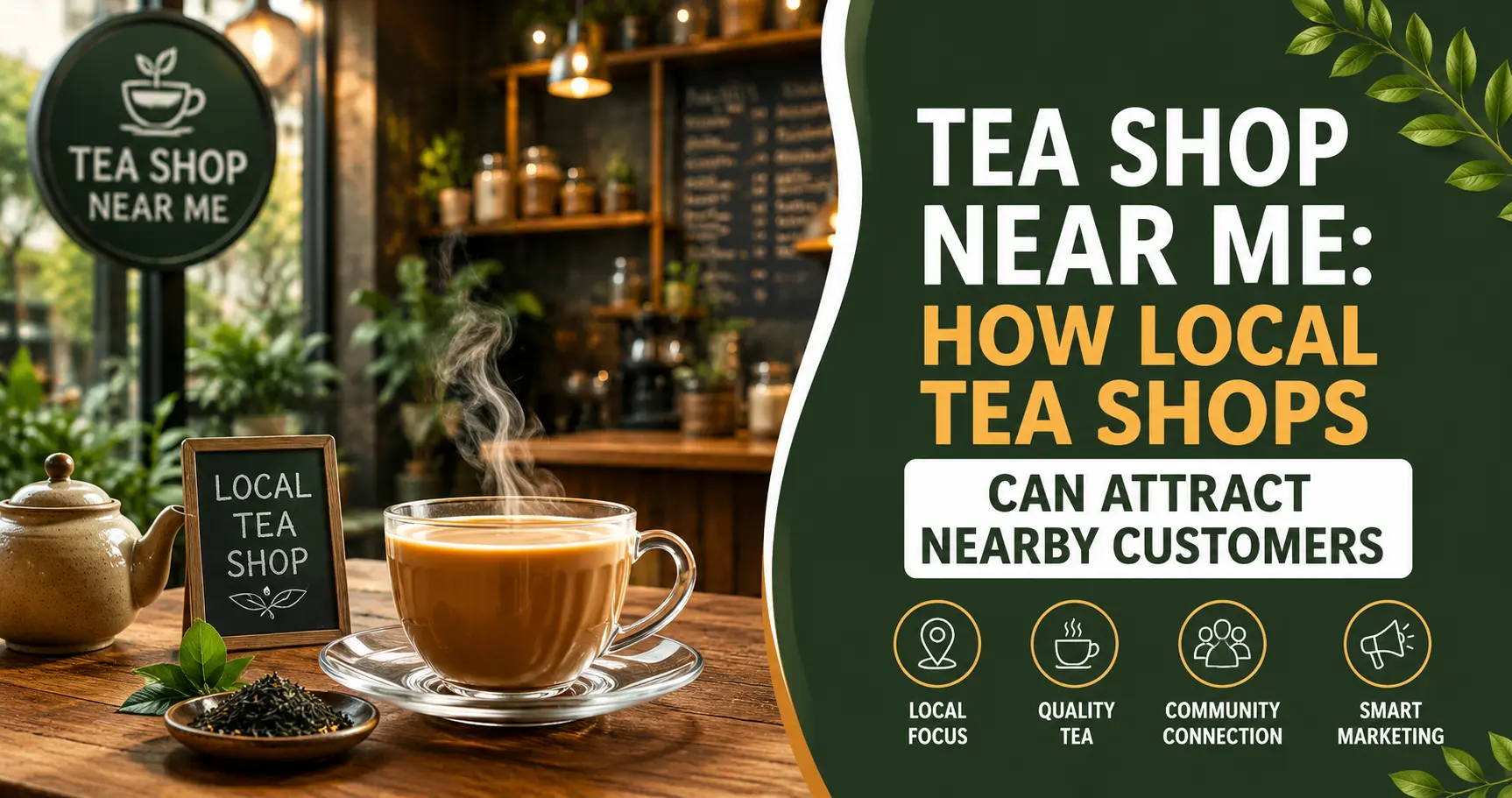
Tea Shop Near Me: How Local Tea Shops Can Attract Nearby Customers
When someone searches “tea shop near me,” they are usually ready to visit, order, or compare nearby places. They want fast, practical answers: which tea shops are open now, how far away they are, what drinks they serve, whether they offer seating or delivery, and what recent customers think.
For tea-shop owners, this is not a biography keyword or a general informational query. It is a high-intent local discovery search. A business cannot control how close it is to every searcher, but it can make its online information accurate, useful and easy for Google Maps and potential customers to understand. Google says local results are primarily influenced by relevance, distance and prominence.
What “Tea Shop Near Me” Means
“Tea shop near me” is a location-sensitive search phrase used by people looking for a nearby tea room, chai café, bubble tea shop, loose-leaf tea retailer, matcha bar or café with a strong tea menu. Search results can vary by the user’s current location, the business’s stated address, opening hours, reviews and the information available across Google and the wider web.
The intent is usually transactional rather than educational. A person searching from a phone may be deciding where to go within minutes, while another may be looking for takeaway tea, boba delivery, afternoon tea, vegan options, Wi-Fi, parking or a suitable place to work.
That means a tea business should not build a thin page that repeats “tea shop near me” dozens of times. It should provide the details a nearby customer genuinely needs.
How Google Chooses Local Results
Google describes three main factors behind local rankings:
| Local factor | What it means for a tea shop |
|---|---|
| Relevance | How closely the business information matches the search, such as tea offerings, category, menu, services and business description. |
| Distance | How close the tea shop is to the searcher or the place named in the search. |
| Prominence | How well known the business appears online and offline, including signals such as links, reviews and ratings. |
Distance matters, but it is not the only factor. Google notes that a more distant business can appear ahead of a closer one when its information better matches the searcher’s needs. That is why a well-maintained profile, clear menu and credible customer feedback can make a meaningful difference for a local tea business.
Build a Complete Google Business Profile
For most independent tea shops, the Google Business Profile is the first place to focus. Google advises businesses to claim their profile and keep core information complete and accurate, including address, contact details, category, opening hours, attributes and photos.support.google+1
A tea shop should review these items regularly:
- Business name: Use the real-world trading name only; do not add keyword phrases such as “Best Tea Shop Near Me” unless they are genuinely part of the registered, public-facing name.
- Primary category: Choose the category that best reflects the main business. A bubble tea specialist, traditional tea room and café may need different category choices.
- Address and map pin: Ensure customers can find the entrance, especially in malls, markets, shared buildings or pedestrian areas.
- Phone number and website: Use the same core business details on the website, social profiles and reputable directories.
- Hours and special hours: Update holiday, seasonal and temporary closing times promptly.
- Products and menu: Add real menu categories and popular items such as milk tea, chai, matcha, fruit tea, loose-leaf blends or afternoon tea where applicable.
- Attributes: Include useful practical information, such as dine-in availability, outdoor seating, Wi-Fi, accessibility, parking or takeaway options when those attributes are available.
Google specifically says that complete and accurate information can make a business more likely to appear in local results.
Create a Useful Local Tea-Shop Page
A tea shop’s website should support—not duplicate—its Google Business Profile. A strong location page gives a customer confidence before they visit and gives search engines a clearer official source for the business.
For a single-location business, the homepage may serve as the main local page. Multi-location businesses should create a distinct page for each verified shop, rather than publishing near-identical pages with only the city name changed.
Include information that helps a real visitor:
- Full address, phone number and opening hours
- Embedded map or clear directions
- Current menu or link to an accessible menu
- Tea specialties and dietary options, where relevant
- Order-ahead, delivery or reservation details
- Interior, storefront and product photos
- Nearby landmarks or neighborhoods, described naturally
- Accessibility, parking and seating information
- A clear call to action, such as “Get directions,” “View menu” or “Order online”
Use natural variations instead of forcing one phrase throughout the page: tea shop in [city], bubble tea in [neighborhood], chai café near [landmark], afternoon tea in [area], and matcha drinks near [district]. These phrases are useful only when they accurately describe the location and offering.
Add LocalBusiness Schema Markup
Structured data does not guarantee rankings, but it helps search engines understand the details published on a website. Google’s documentation says LocalBusiness structured data can help pages appear in enhanced Google Search results, provided the markup follows the relevant guidelines.
For a tea shop, appropriate schema may include:
LocalBusinessor a relevant subtype- Business name
- Street address and geographic coordinates
- Opening hours
- Telephone number
- Website URL
- Price range
- Menu URL
- Social profiles, where appropriate
The information in the markup must match visible on-page details and the business’s public listings. Google recommends using its Rich Results Test to check which rich-result features may be generated, while the Schema Markup Validator can help validate general structured data.
Reviews Matter, but Authenticity Matters More
Reviews are a major part of the decision process for “tea shop near me” searches. Google states that more reviews and positive ratings can help a business’s local ranking, while review responses show customers that the business values feedback.
The most sustainable approach is simple:
- Ask satisfied customers for an honest review after a completed visit or order.
- Make the review process easy with a legitimate Google review link or QR code.
- Never buy reviews, offer incentives specifically for positive reviews, or pressure customers to change feedback.
- Respond calmly and specifically to both praise and criticism.
- Use recurring review themes to improve service, menu clarity, waiting times or product consistency.
A response to a negative review should not become a public argument. Thank the customer, address the issue where possible and invite an offline resolution if personal order details are required.
Content Ideas That Support Local Discovery
A tea shop does not need a large blog to compete locally. It needs a small amount of genuinely helpful, well-maintained content.
Useful topics include:
- A guide to the shop’s signature teas
- Bubble tea topping and sweetness options
- Matcha, chai or herbal-tea menu explainers
- Afternoon-tea booking information
- Dairy-free and vegan drink choices
- Tea gift sets, loose-leaf products or seasonal menus
- Event pages for tea tastings, community gatherings or private bookings
For example, a tea room offering afternoon tea should publish an up-to-date page explaining the menu, price, reservation policy, dietary accommodations and service times. That page is more helpful—and more credible—than a generic article repeating local keywords.
Track the Right Outcomes
Success is not simply ranking first for “tea shop near me” from one device. Results shift by location, time, competition and user context. Instead, track business outcomes:
- Calls from Google Business Profile
- Requests for directions
- Website visits from local search
- Menu views and online orders
- Booking enquiries
- Review volume, rating trends and response quality
- Search terms that lead customers to the profile
Google Business Profile and Search Console can help business owners understand how people find their listing and website. Verifying website ownership in Search Console also helps establish the site as an official business presence.
Can a tea shop rank for “tea shop near me” without a website?
It can appear in Google Maps through a properly claimed and maintained Google Business Profile, but a website gives the business more room to publish its menu, location details, booking information and official brand content.support.
Should I put “near me” in my tea shop’s business name?
No. Use the real business name. Adding search terms to a name when they are not part of the public-facing business identity can create inaccurate information and undermine trust.
What should a tea shop post on Google?
Prioritize useful updates: new menu items, seasonal drinks, revised hours, events, reservation availability and current storefront or product photos. Keep every update accurate and customer-focused.
Do positive reviews help a tea shop appear locally?
Google says that more reviews and positive ratings can help a business’s local ranking, although they are only part of a broader system that also considers relevance and distance.
What is the best page title for a local tea shop?
Use a title that identifies the business and location naturally, such as: [Business Name] | Bubble Tea, Chai & Matcha in [City]. Include only services the shop genuinely offers.
Sources
Local Business (LocalBusiness) Structured Data
Tips to improve your local ranking on Google
After Article Read To visit Least News
Movie Theater Near Me 2026: Best Cinemas, Showtimes, Ticket Prices, IMAX & Dolby Cinema
Pizza Near Me: How to Find a Great Local Pizza Place in the USA
Fast Food Near Me: How to Find the Best Nearby Restaurant
Breakfast Near Me: How to Find a Great Breakfast Spot Nearby
Brunch Near Me: How to Find a Great Local Brunch Without Guesswork
Ice Cream Near Me: How to Find a Great Local Scoop
Mexican Restaurant Near Me: A Better Guide to Finding Great Mexican Food
Chinese Restaurant Near Me: How to Find a Better Local Restaurant
Bakery Near Me: How to Find a Great Local Bakery in the USA
Steakhouse Near Me: How to Find a Great Steakhouse for Your Next Meal
Burger Restaurant Near Me: How to Find a Great Local Burger Spot
Juice Bar Near Me: How to Find a Fresh, Reliable Local Option