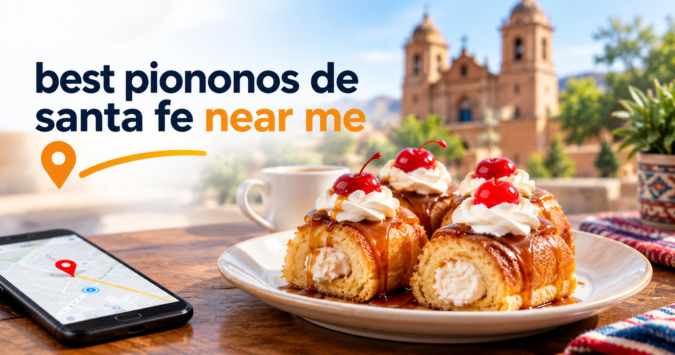

If you search for best piononos de Santa Fe near me, you are likely looking for more than an ordinary sweet. Piononos de Santa Fe are a small Spanish pastry linked closely to Santa Fe, a town in Granada, Andalusia. They are known for their rolled sponge, sweet syrup, cream filling, and toasted topping. Spain’s official tourism website also lists piononos de Santa Fe among the traditional sweets of Andalusia. Spain.info
The main challenge is knowing what makes a good pionono and where to look for one. Not every bakery will make the pastry in exactly the same way, and some places may sell modern versions.
This guide explains what piononos are, where they come from, how to find them near you, and what to check before buying them.
The best local pastry is often the one that combines a fresh taste with a clear link to its traditional style.
What Are Piononos de Santa Fe?
Piononos are small sweet pastries from Santa Fe, near Granada in southern Spain. The traditional pastry uses a thin rolled sponge with sweet syrup, a cream-based filling, and a toasted topping.
The name is linked to Pope Pius IX, whose name in Italian was Pio Nono. The pastry was created by Ceferino Isla in Santa Fe, and its shape is traditionally associated with the appearance of a small figure wearing a papal cap. Casa Ysla states that its pionono tradition began in 1897. Pionono
The pastry is small, but its flavor is rich. The soft sponge, sweet syrup, creamy center, and toasted top give it a mix of textures in one bite.
That is one reason the pastry remains strongly connected with Granada’s food culture.
Why Santa Fe Is Important to the Pastry
Santa Fe is a historic town in the province of Granada. Spain’s official tourism website says the town was founded by the Catholic Monarchs in 1491 and is about 11 kilometers from Granada. Spain.info
The town is also known for its connection with Christopher Columbus. The Capitulations of Santa Fe were signed there on April 17, 1492. These agreements set out the conditions for Columbus’s voyage to the Indies. Spain.info
The town’s history gives the pastry a strong sense of place. Piononos are not simply a general Spanish dessert. Their name and identity are closely tied to Santa Fe.
What Makes a Good Pionono?
When looking for the best piononos de Santa Fe near me, it helps to know what you should actually look for.
A traditional-style pionono should have a soft sponge and a moist texture. The syrup should add sweetness without making the pastry feel completely wet or heavy.
The cream should work with the sponge rather than hide its flavor. The toasted topping adds another layer, giving the pastry a lightly caramelized taste.
A useful way to judge a pionono is to look at these simple points:
| What to check | What you want to see |
|---|---|
| Sponge | Soft, thin and rolled neatly |
| Syrup | Moist texture without being overly soggy |
| Filling | Smooth and balanced cream |
| Top | Lightly toasted or caramelized |
| Freshness | Soft and pleasant rather than dry |
| Size | Small, traditional pastry format |
| Overall taste | Sweet, creamy and balanced |
There is no single official score that can tell you which bakery makes the best pionono. Taste is personal, and different bakeries may use slightly different recipes.
Best Piononos de Santa Fe Near Me: How to Search
A local search can be useful, but the results may include bakeries that sell similar pastries rather than traditional piononos.
Start by searching for best piononos de Santa Fe near me on your preferred map or search service. Then look closely at the bakery name, menu, photos, location and recent customer information.
If you are in or near Granada, searching specifically for pionono de Santa Fe can give more focused results.
For travelers, Santa Fe itself is an especially useful place to search because the pastry comes directly from this town.
The Santa Fe tourism office identifies the pionono as the town’s signature sweet and lists local pastry businesses that make or sell it. Turismo Santa Fe
Look for Freshness First
Freshness can make a big difference with a soft pastry.
A fresh pionono should have a pleasant soft texture. The sponge should not feel hard or stale, while the cream should still have a smooth texture.
If you are buying several pastries, ask the bakery when they were made. This is a simple question and can help you choose between products that have been sitting on display for different lengths of time.
Casa Ysla says its piononos are made daily at its Santa Fe bakery and delivered to its pastry shops and other food businesses. Pionono
This does not mean every bakery follows the same process. It simply shows why production time can matter when choosing a fresh pastry.
Traditional and Modern Versions
Not every pionono sold today will be identical.
The classic version is strongly linked with sponge, syrup, cream and a toasted topping. But some pastry shops may create their own versions with different fillings or flavors.
Granada’s gastronomic guide notes that some bakers have adapted the traditional recipe with ingredients such as chocolate, dulce de leche, fruit or meringue. Sabor Granada
These versions can be interesting, but they serve a different purpose.
If you want to understand the traditional Santa Fe pastry, start with the classic version. Once you know the original style, you can try modern variations and compare them.
Where to Look for Piononos
If your search is focused on the original tradition, Santa Fe is the most direct place to begin.
The local tourism information lists pastry businesses in Santa Fe, including Casa Ysla. Turismo Santa Fe
Casa Ysla’s official site lists its bakery and production location on the Santa Fe-Granada road. It also states that its piononos are made daily in Santa Fe. Pionono
Granada is another practical option. The city has many pastry shops, and official Granada food information describes piononos as a common sweet in local pastry shops. Sabor Granada
If you are outside Spain, availability can be less certain. A search for the exact pastry name may work better than simply searching for Spanish desserts.
How to Choose Between Nearby Bakeries
If several bakeries appear in your search, compare a few simple things instead of relying only on a star rating.
First, check whether the bakery clearly lists piononos on its current menu. A bakery may have old photos online but no longer sell the item.
Next, look for recent customer photos. These can help you see the actual size, shape and topping.
Then check the bakery’s opening hours. Traditional pastries are often easier to find during normal bakery hours than late in the day.
Finally, ask whether the piononos are made in-house or supplied by another producer. This can help you understand what you are buying.
A Simple Comparison Checklist
Use this checklist before you visit:
- Does the bakery currently sell piononos?
- Are they described as piononos de Santa Fe?
- Are recent photos available?
- Do the pastries look fresh?
- Is the traditional cream and toasted topping present?
- Does the bakery explain where they are made?
- Are the opening hours current?
- Can you buy one pastry before purchasing a larger box?
- Are allergy details available if you need them?
These checks are more useful than choosing a bakery based only on a general rating.
What Should a Traditional Pionono Taste Like?
The first thing you notice should be sweetness and softness.
The sponge provides the base. The syrup keeps it moist and adds sweetness. The cream brings a richer texture, while the toasted topping gives a slightly caramelized taste.
Cinnamon is also part of the traditional flavor profile described by Granada’s gastronomic guide. Sabor Granada
The pastry is small because it is designed to deliver a strong combination of flavors in a compact serving.
A good pionono does not need to be large to be satisfying.
Piononos and Andalusian Food Culture
Piononos are part of a wider Andalusian tradition of sweets.
Spain’s official tourism information points to the use of ingredients such as almonds and honey in Andalusian confectionery and notes the role of convent traditions in preserving regional sweets. It also specifically lists piononos de Santa Fe among Andalusia’s traditional pastries. Spain.info
This wider food history helps explain why traditional pastries remain important in the region.
Piononos also show how one local pastry can become a strong symbol of a town. The pastry carries the name of Santa Fe wherever it is sold.
Common Mistakes When Searching for Piononos
One common mistake is searching only for “Spanish pastry near me.” This may produce many different desserts.
If piononos are your goal, use the exact name.
Another mistake is assuming every product called a pionono is the same. The word is used for different pastries in different countries, so location matters.
A third mistake is ignoring freshness. A pastry may have the correct name but still not be at its best if it has been stored for too long.
You should also avoid assuming that a high online rating means the pastry itself is the best choice. A bakery may have excellent reviews for bread, cakes or coffee while offering a different quality of piononos.
Warning Signs When Buying
There are a few simple things to watch for.
Be careful if the bakery gives no clear information about the product and cannot explain what it contains.
Very dry sponge can be a sign that the pastry is not fresh. A topping that looks completely different from the traditional style may indicate that you are buying a modern variation.
You should also check ingredient information if you have food allergies. Traditional piononos contain ingredients associated with common allergens, including wheat, eggs and dairy.
If alcohol is a concern, ask about the syrup and ingredients before buying. Recipes can differ between producers.
Are Piononos Only Found in Santa Fe?
No. Piononos can be found in Granada and other places, especially bakeries that sell traditional Andalusian sweets.
However, Santa Fe has a special connection to the pastry because this is where the modern Santa Fe pionono tradition began.
The town’s tourism information describes the pastry as its signature sweet and notes that several Santa Fe pastry businesses produce their own versions. Turismo Santa Fe
This makes Santa Fe an important destination for anyone who wants to explore the pastry at its source.
Is Casa Ysla the Original Pionono Bakery?
Casa Ysla traces its pionono history to Ceferino Isla, who began making the pastry in 1897. Its official history says the bakery started on Calle Real in Santa Fe and that the recipe has continued through the family tradition. Pionono
The company also says that its piononos are still made daily in its Santa Fe bakery using an artisan process. Pionono
This makes Casa Ysla an important name in the history of the pastry. It does not mean that other Santa Fe pastry shops cannot make good piononos. Local producers may have their own styles and recipes.
High-Search-Intent Questions About Piononos
Where can I find the best piononos de Santa Fe near me?
Search for the exact phrase “piononos de Santa Fe” plus your town or city. Check current menus, recent photos and opening hours before visiting. If you are near Granada, Santa Fe is the most direct place to explore the pastry’s local tradition.
What is inside a pionono de Santa Fe?
The traditional pastry is made with rolled sponge, sweet syrup, cream and a toasted topping. Granada’s gastronomic information also describes a filling based on pastry yolk and cinnamon. Sabor Granada
Why are piononos called piononos?
The name is connected to Pope Pius IX, known in Italian as Pio Nono. Ceferino Isla created the pastry in Santa Fe and used the name as a tribute to the pope. Pionono
Are piononos from Granada?
They come from Santa Fe in the province of Granada, Andalusia. Santa Fe is located close to Granada city and has a strong connection with the pastry. Spain.info
Should I try a traditional or flavored pionono first?
If you have never tried one, the traditional version is the clearest way to understand the original style. After that, you can try modern versions with different fillings or flavors.
Conclusion
Finding the best piononos de Santa Fe near me starts with knowing what you are looking for.
A traditional pionono is a small pastry with a soft rolled sponge, sweet syrup, creamy filling and toasted topping. Its story goes back to Santa Fe and Ceferino Isla, who created the pastry in 1897. Pionono
For the most direct experience, look for bakeries in Santa Fe or Granada that clearly identify their product as a pionono de Santa Fe. Check freshness, ingredients, current availability and the style of the pastry before buying.
The pastry may be small, but its connection with Santa Fe gives it a much bigger place in Granada’s food culture.