Blog ThriftyEvents.net: A Practical Guide to Budget Event Planning
Blog ThriftyEvents.net is an online resource focused mainly on affordable event planning, budgeting, and DIY ideas. It is designed for people who want to plan birthdays, weddings, family gatherings, community events, and other celebrations without spending more than necessary. The site can be useful for ideas and basic planning guidance, but readers should still check local prices, vendor terms, permits, contracts, and safety rules before making important decisions.
The main idea behind ThriftyEvents.net is simple: a memorable event does not always need a large budget. Good planning, clear priorities, creative choices, and careful spending can often matter more than expensive decorations or premium services.
For people searching for Blog ThriftyEvents.net, this guide explains what the site is, what kind of content it publishes, how its advice can help, where readers should be careful, and how to use budget event-planning ideas in the United States.
What Is Blog ThriftyEvents.net?
ThriftyEvents.net presents itself as a resource for people who want to plan events while controlling costs. Its stated mission centers on practical event-planning advice, creative DIY projects, and budgeting.
The site is organized around several main content areas, including:
- Budgeting tips
- DIY ideas
- Event planning
- General money-saving guidance
- Affordable celebration ideas
This makes the site more like an informational blog than a traditional event-planning company directory.
That difference matters.
A blog can give you ideas about choosing a venue, building a budget, making decorations, or cutting catering costs. It does not automatically mean that every vendor, booking service, package, or price mentioned elsewhere under the same name is available in your area.
Readers should treat the site mainly as a place for research, ideas, and planning guidance unless a specific service is clearly explained and confirmed.
What Is the Main Purpose of ThriftyEvents.net?
The main purpose is to help readers make smarter choices when planning events.
Many people begin planning with an idea of how they want an event to look. They may think about flowers, food, music, invitations, photography, or a beautiful venue before deciding how much they can actually spend.
That can create problems later.
A budget-first approach works differently. You decide what you can afford, identify the parts of the event that matter most, and then build your plan around those limits.
This approach does not mean choosing the cheapest option every time. It means spending money where it creates the most value.
For example, suppose a family is planning a birthday party. They care most about good food and giving children enough space to play. Expensive printed invitations and large flower displays may add little value for them.
They could spend more on food and a suitable location while using digital invitations and simple decorations.
Another family might have different priorities.
That is an important part of smart event planning: there is no single perfect budget for every event.
Main Content Areas on Blog ThriftyEvents.net
The site covers several topics connected with planning and saving money. Understanding these areas can help readers decide which information is most useful for their situation.
Event Planning
Event planning content deals with the process of turning an idea into an organized event.
This can include choosing a date, deciding on a guest count, selecting a venue, planning food, arranging decorations, working with vendors, and creating a timeline.
For first-time hosts, these basic guides can be useful because an event involves many small decisions.
Missing even one important detail can create extra costs.
For example, a low-priced venue may look like a bargain. But it may become expensive if you must separately rent tables, chairs, sound equipment, or other items.
The cheapest starting price is not always the lowest final price.
Good event planning looks at the complete cost and not just the first number you see.
Budgeting Tips
Budgeting is another major theme.
This subject goes beyond simply finding cheap products. A useful event budget should show how much money is available, where it will go, what has already been paid, and what remains unpaid.
A basic event budget may include:
- Venue
- Food and drinks
- Decorations
- Entertainment
- Photography
- Invitations
- Rentals
- Transportation
- Staff
- Permits or insurance when required
- Taxes and service fees
- An emergency or contingency amount
Not every event will need every category.
A backyard birthday party may have almost no venue expense. A wedding or business event could have many more costs.
The important point is to identify likely expenses before making large payments.
DIY Ideas
DIY, or “do it yourself,” content is another important part of ThriftyEvents.net.
DIY can work well for items such as simple signs, table numbers, party favors, invitations, centerpieces, and basic decorations.
It can save money, but DIY is not automatically cheaper.
Materials cost money. Tools may need to be purchased. Projects take time. Mistakes can require buying materials again.
Imagine that ready-made table decorations cost $50. You decide to make your own for $25, but then need another $20 of tools and several hours of work.
The real saving is much smaller than it first appeared.
For this reason, DIY projects work best when they are simple, repeatable, and within your skill level.
Blog ThriftyEvents.net at a Glance
| Area | What Readers May Find | Best Use |
|---|---|---|
| Event planning | Planning ideas and general guidance | Building an event plan |
| Budgeting | Cost-control and budgeting advice | Setting spending limits |
| DIY | Homemade project ideas | Saving on simple décor and details |
| Venue ideas | Ways to think about affordable spaces | Comparing venue options |
| Food planning | Lower-cost serving and menu ideas | Controlling per-guest costs |
| General guidance | Organization and planning concepts | Creating checklists and timelines |
The important word here is “guidance.” Actual costs and requirements can change greatly depending on your location, event size, date, and vendors.
Who Can Benefit From Blog ThriftyEvents.net?
The site may be useful for several types of readers.
A parent planning a birthday party can use budget ideas to control food, entertainment, and decoration costs.
A couple planning a wedding can use budgeting concepts to decide which parts of the day deserve more money.
A community group may find ideas for low-cost meeting spaces, reusable decorations, or volunteer-supported activities.
A small business can apply some of the same principles to team gatherings, launches, or networking events.
First-time event planners may get the most value from simple checklists and explanations because they may not know which costs to expect.
Experienced planners may already understand these basics, but they can still use budget-focused ideas as inspiration.
How to Build a Realistic Event Budget
A strong budget should come before major purchases.
Start with the maximum amount you are comfortable spending.
Do not begin with what you think the event “should” cost. Begin with what you can actually afford.
Then estimate the number of guests.
Guest count is one of the most important numbers in event planning because many costs depend on it.
If food costs are charged per guest, adding 20 more people can increase the food bill. You may also need more tables, chairs, drinks, tableware, invitations, and favors.
After deciding on a rough guest count, choose your main priorities.
Pick Your Top Three Priorities
Ask yourself:
What three things matter most?
For a wedding, the answer could be venue, food, and photography.
For a child’s birthday, it might be entertainment, food, and activities.
For a business event, the priorities could be location, sound equipment, and guest comfort.
Spend more of your budget on those areas.
Reduce spending on things that matter less.
This is often better than trying to make every part of the event equally impressive.
Keep Money for Unexpected Costs
Do not plan to spend every available dollar immediately.
Small extra costs can appear during planning.
You might need an extra rental item. A delivery fee may be higher than expected. Guest numbers could change. A weather problem may require a backup option.
Keeping part of the budget uncommitted gives you room to handle these changes.
Understand Fixed and Variable Event Costs
One of the most useful budgeting ideas is knowing the difference between fixed and variable costs.
Fixed Costs
A fixed cost normally does not change much when the guest count changes.
Examples can include a venue rental fee, DJ package, photographer package, or some equipment rentals.
If a photographer charges a set amount for four hours, that cost may remain the same whether 50 or 70 guests attend.
Variable Costs
Variable costs rise or fall based on the size of the event.
Food is a common example.
If catering is priced per person, a larger guest list means a larger bill.
Drinks, chairs, tableware, favors, and some staffing expenses can also depend on attendance.
Understanding the difference helps you see where cuts will have the greatest effect.
If variable costs are causing problems, reducing the guest list can make a large difference.
If fixed costs are too high, you may need a different venue or service package.
How to Save Money on an Event Venue
The venue can be a major expense, so it deserves careful research.
Do not compare locations based only on the rental fee.
Ask what is included.
One venue may charge more but include tables, chairs, parking, setup time, basic equipment, and cleaning.
Another may advertise a lower rental price but charge extra for those services.
The second venue can end up costing more.
Consider Different Days and Times
Popular dates can cost more.
Saturday evenings are often in high demand for weddings and large celebrations. A weekday, Sunday, daytime event, or less popular season may offer different pricing.
Availability and discounts vary, so ask venues directly rather than assuming a cheaper rate is available.
Consider Community Spaces
Depending on your location in the United States, possible options can include community centers, parks, recreation facilities, clubhouses, or other local spaces.
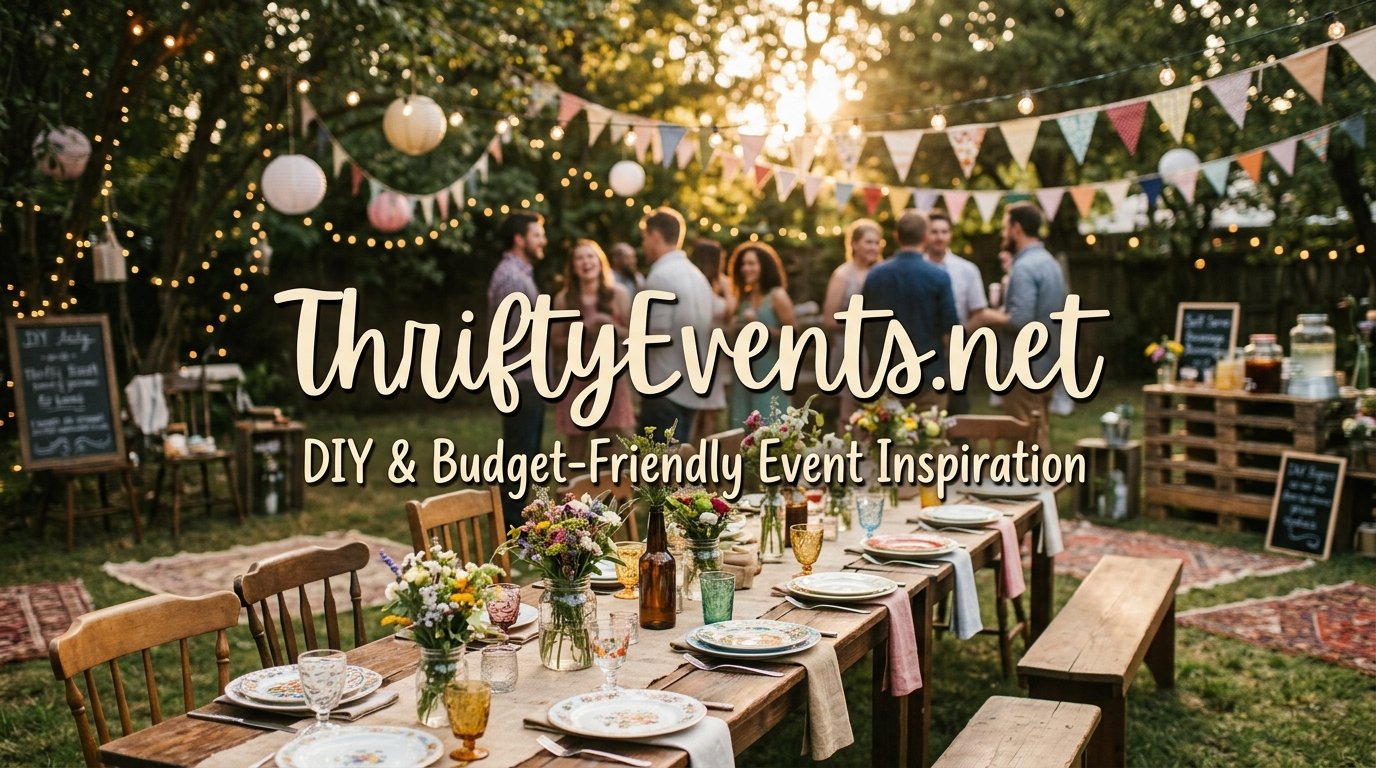
A private backyard can also work for some small events.
However, “free venue” does not always mean free event.
A backyard gathering may still require extra seating, lighting, shade, portable equipment, cleanup, or weather protection.
Public spaces may also have permits, restrictions, reservation rules, insurance requirements, or limits on music and alcohol.
Check the full requirements before committing.
Saving Money on Food Without Hurting the Guest Experience
Food can become expensive because its cost often grows with the guest list.
The first step is deciding what type of meal your event actually needs.
Not every gathering requires a large plated dinner.
A daytime birthday may work well with snacks, sandwiches, fruit, and cake. An afternoon community gathering could use a simpler menu than a formal evening dinner.
The timing of an event can therefore affect food choices.
Compare Complete Catering Quotes
When getting catering prices, ask what the quote includes.
A low food price can look attractive until delivery, staff, rentals, service fees, and other charges are added.
Compare the final expected cost instead of only the menu price.
Also confirm what happens if the final guest count changes.
Buffet and Family-Style Options
Buffet or family-style service can sometimes reduce the staffing needs of an event compared with more formal service.
But it is not guaranteed to be cheaper in every case.
Food choice, labor, equipment, guest count, and caterer pricing all matter.
Ask for complete quotes for the service styles you are considering.
Using DIY Without Creating More Work and Expense
DIY is one of the most attractive parts of budget event planning.
It also creates one of the easiest traps.
People sometimes compare a professional product’s full price with only the raw material cost of DIY.
That is not a fair comparison.
Your real DIY cost includes materials, tools, transportation, printing, failed attempts, and time.
Before starting a project, ask four questions:
Can I make this safely?
Do I already have the tools?
How many copies do I need?
How long will the complete project take?
Making one centerpiece may be fun. Making 40 centerpieces the night before a wedding may not be.
Good DIY Projects
Simple projects are usually safer choices.
Table numbers, signs, gift bags, small centerpieces, digital invitations, and simple decorations can be manageable.
Items can sometimes be reused across different parts of an event as well.
For example, a decorative item used during a ceremony could later be moved to the reception area.
That reduces the need to buy two sets of décor.
When DIY Is a Bad Idea
Avoid doing complicated work simply because professional help costs money.
Electrical work, unsafe structures, complex installations, and other higher-risk tasks may require qualified people.
Food preparation also needs careful handling, especially when serving many guests.
Saving money is not worth creating a safety problem.
How to Compare Event Vendors
A good budget planner does not automatically hire the cheapest vendor.
Price is only one part of the decision.
You should also look at what is included, payment terms, cancellation rules, experience, communication, and any requirements related to your event.
Get important terms in writing.
If a vendor gives you a price, ask whether taxes, travel, setup, delivery, equipment, overtime, or other charges may apply.
This makes different quotes easier to compare.
For example, Vendor A may quote $600 while Vendor B quotes $750.
Vendor A sounds cheaper.
But if Vendor A later adds $100 for delivery, $75 for setup, and $75 for equipment, both offers cost the same.
The headline price did not tell the full story.
Keep an Event Budget Tracker
Planning does not end when you create the first budget.
Your budget should change as you receive real prices.
A simple spreadsheet or notebook can work.
For every expense, record the planned amount, quoted amount, amount paid, remaining balance, payment deadline, and any important cancellation date.
Update the tracker whenever money is paid.
This prevents a common problem: forgetting about deposits.
Suppose a vendor costs $1,000 and you pay a $300 deposit. Your event has not become $300 cheaper. You still owe $700.
Tracking both paid and unpaid amounts gives you a clearer picture of your true spending.
Do Not Confuse Inspiration With Local Pricing
This is especially important when using Blog ThriftyEvents.net or any other event-planning website.
An article can teach a useful method without giving the right price for your event.
The United States has large differences in local costs.
Venue prices in one city may be very different from those in another. Labor, catering, transportation, permits, taxes, and seasonal demand can also change costs.
Old articles can create another problem.
Even if a price was accurate when an article was written, it may no longer be current.
Use online cost examples to understand the type of expense involved. Use current local quotes when creating your actual budget.
Is Blog ThriftyEvents.net an Event Booking Platform?
Based on its core public presentation, ThriftyEvents.net is best treated primarily as an informational resource about event planning, budgeting, and DIY topics.
This distinction is important because online descriptions of the site are not always consistent.
Some pages associated with the name make broader claims about planning services, vendor resources, tools, packages, or other features.
Readers should not assume every feature mentioned in an individual article is a permanent site-wide service.
If you want to use a specific service, confirm that the feature actually exists, determine who provides it, and read the current terms before sharing information or making a payment.
For ordinary event-planning articles, the risk is much lower because you are mainly using ideas.
How to Use Blog ThriftyEvents.net Effectively
The best way to use the site is as one part of your planning process rather than treating every article as a complete plan for your event.
Start with ideas.
Read about budgeting, venues, DIY projects, food, and planning methods. Save the ideas that match your event.
Next, create your own budget based on your real situation.
Your guest count, city, date, event type, and priorities matter more than a generic example.
Then research local options.
Get current prices from venues and vendors. Ask what is included. Compare complete costs.
Finally, verify important details.
A blog article should not replace a contract, local government requirement, insurance information, food-safety guidance, or professional advice when those things are needed.
This approach lets you benefit from creative online ideas without depending on unverified details.
Common Budget Event Planning Mistakes
A cheap event can still become expensive when planning mistakes appear.
One common mistake is starting to shop before setting a total budget. Small purchases feel harmless on their own, but dozens of small expenses can consume a large amount of money.
Another mistake is inviting people before deciding how many guests the budget can support.
Once invitations are sent, reducing the guest list becomes difficult.
People also forget extra fees. Delivery, setup, taxes, service charges, overtime, equipment, and cleanup can change the final price.
Another mistake is choosing DIY projects that are too large. Saving $100 is not very useful if the project creates days of stress and requires unexpected purchases.
Finally, some hosts focus too much on how an event looks in photos.
Guest comfort often matters more.
Enough seating, suitable food, working restrooms, clear directions, comfortable temperatures, and a reasonable schedule can have a greater effect on the experience than expensive decorative details.
A Simple Budget Event Planning Process
You can turn many of the ideas connected with Blog ThriftyEvents.net into a practical process.
First, define the event. Know why you are holding it and what you want guests to experience.
Second, set your maximum budget.
Third, estimate a realistic guest count.
Fourth, choose your three biggest priorities.
Fifth, divide the available money among major categories.
Sixth, research venues and vendors using complete prices rather than advertised starting prices.
Seventh, decide which simple tasks you can do yourself.
Eighth, keep money available for unexpected expenses.
Ninth, record every payment and remaining balance.
Finally, review your plan before the event and confirm all important details with vendors.
These steps sound simple, but following them consistently can prevent many common spending problems.
Is Blog ThriftyEvents.net Useful for U.S. Readers?
It can be useful for U.S. readers looking for general event-planning ideas, especially around budgeting, DIY projects, and controlling unnecessary costs.
However, readers should separate general advice from local facts.
An idea such as comparing several venues is useful almost anywhere.
A specific claim about venue prices, permits, insurance, taxes, or vendor availability may not apply across the United States.
Rules can even differ between nearby cities or counties.
For that reason, use general planning advice broadly but verify location-specific information locally.
Frequently Asked Questions
What is Blog ThriftyEvents.net?
Blog ThriftyEvents.net is mainly an online resource about budget-friendly event planning, DIY ideas, budgeting, and ways to organize celebrations without unnecessary spending. It can help readers find planning ideas and understand basic cost-saving methods.
Is ThriftyEvents.net only about cheap events?
No. The main idea is better described as smart spending rather than simply choosing the cheapest option. A good budget event puts money toward important parts of the guest experience while reducing spending on lower-priority items.
What types of events can use ThriftyEvents.net ideas?
Many of the general ideas can apply to birthdays, weddings, family gatherings, community events, school-related celebrations, fundraisers, and some business events. The exact plan should change based on the size and purpose of the gathering.
Can I trust event prices mentioned in online articles?
Do not build your budget around an online price without checking it. Event costs vary by city, date, season, guest count, service level, and vendor. Get current quotes from local providers before making financial decisions.
Are DIY event decorations always cheaper?
No. DIY can save money when a project is simple and you already have the needed skills or tools. It can become more expensive when you must buy special equipment, replace failed materials, or spend many hours completing the work.
What is the best way to save money when planning an event?
Start with a firm total budget and realistic guest count. Choose your top priorities, compare full vendor costs, avoid unnecessary extras, use simple DIY projects where practical, and keep track of every payment. Cutting guest-dependent costs can also have a major effect when the budget becomes tight.
Conclusion
Blog ThriftyEvents.net is best understood as a budget-focused event-planning resource that covers planning ideas, budgeting, DIY projects, and ways to make celebrations more affordable. Its strongest value is helping readers think carefully about what matters, where money can be saved, and how simple choices can reduce unnecessary spending.
The most useful approach is not to copy every idea exactly. Adapt the advice to your own event, guest count, priorities, location, and budget. Check current local prices, compare complete vendor quotes, understand contracts, and verify permits or other requirements when they apply.
A successful budget event is not simply the cheapest event possible. It is one where money is used with purpose. Set a realistic limit, spend more on the things that matter, cut costs where guests are unlikely to miss them, and track expenses from the beginning. With careful planning, creativity, and clear priorities, an event can feel thoughtful and memorable without requiring unnecessary spending.