
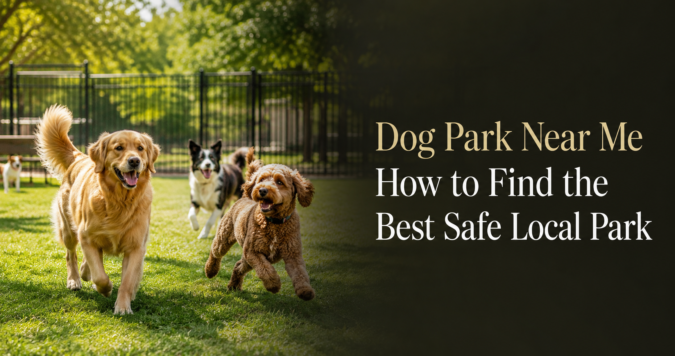

Finding a dog park near me sounds simple until you actually need one that is safe, clean, practical, and suitable for your dog. The nearest fenced field is not automatically the best choice. Dogs differ in size, confidence, energy, training, health, and social experience, while dog parks differ just as much in layout, maintenance, rules, surfaces, security, and crowd behavior.
A good dog park gives dogs room to move, explore, exercise, and interact in an appropriate environment. For owners, it should provide clear rules, secure boundaries, convenient access, and enough visibility to supervise effectively. Poorly designed or poorly managed spaces can make an otherwise enjoyable outing stressful.
This guide explains how to find and evaluate nearby dog parks, what facilities matter most, what to check before entering, how to recognize warning signs, and when a quieter alternative may actually be better for your dog.
The best dog park is not necessarily the closest one; it is the place where your dog can exercise comfortably while you remain able to supervise and leave easily when needed.
Quick Comparison: What to Look for in a Dog Park Near Me
When comparing local options, focus on features that directly affect safety, comfort, usability, and your dog’s experience.
| Feature to Check | Why It Matters | What a Good Park Usually Offers | Possible Warning Sign |
|---|---|---|---|
| Secure fencing | Reduces the risk of dogs escaping | Continuous fencing without obvious gaps | Broken sections, large gaps, damaged gates |
| Entrance design | Helps control arrivals and departures | Double-gated or controlled entry area | Single gate opening directly to traffic |
| Size separation | Can make play more manageable | Separate areas where available | Very small and large dogs crowded together |
| Ground condition | Affects comfort and cleanliness | Maintained grass, turf, gravel, or other suitable surface | Deep mud, sharp debris, standing water |
| Visibility | Makes supervision easier | Open sightlines across most of the park | Blind corners or dense obstructions |
| Waste disposal | Supports hygiene | Bins and clearly marked disposal areas | Overflowing bins or widespread waste |
| Water access | Useful during active play | Clean drinking source where maintained | Dirty communal containers or stagnant water |
| Shade and seating | Improves comfort for longer visits | Trees, shelters, benches, or shaded areas | No relief from strong sun |
| Posted rules | Clarifies expected behavior | Visible operating rules and restrictions | No clear guidance or outdated signs |
| Parking/access | Makes visits more practical | Safe pedestrian access or nearby parking | Difficult roadside access |
| Maintenance | Reflects overall management | Working gates, clean surfaces, repaired equipment | Repeated damage or neglected facilities |
| Crowd level | Influences stress and play quality | Enough space for dogs to spread out | Persistent overcrowding |
This comparison is more useful than judging a park solely by ratings or photographs. A beautifully landscaped park may still be unsuitable if its gates are unreliable, while a basic municipal park may work extremely well if it is secure, spacious, and responsibly used.
What Is a Dog Park?
A dog park is a designated recreational space where dogs are permitted, often including an off-leash area enclosed by fencing. Facilities vary considerably.
Some dog parks are simple fenced fields. Others may include separate sections for different dog sizes, walking paths, drinking stations, benches, shade structures, agility-style equipment, waste stations, lighting, or washing areas.
The rules also vary. A park may restrict puppies below a certain age, require current licensing or vaccinations under local regulations, prohibit food or toys, limit the number of dogs one person can supervise, or establish specific operating hours.
For this reason, anyone searching for a dog park near me should verify the rules of an individual park rather than assuming that all public dog parks operate in the same way.
How to Find a Dog Park Near Me
Local search tools make finding nearby parks relatively easy, but discovering a name on a map is only the first step.
Start with a map or local search service and search terms such as:
- dog park near me
- off-leash dog park near me
- fenced dog park nearby
- dog exercise area near me
- small dog park near me
- dog-friendly park near me
Then inspect the available information rather than automatically choosing the first result.
Check the official website of the city, county, municipality, parks department, recreation authority, or park operator where possible. Official sources are particularly valuable for current operating hours, closures, rules, maintenance notices, permit requirements, and temporary restrictions.
Map listings and reviews are useful for understanding everyday conditions, but user-generated information can become outdated. A review describing a broken water fountain from months ago does not prove that it is still broken today.
For important details, especially access and rules, current official information should take priority.
How We Evaluate a Good Dog Park
A reliable evaluation should look beyond popularity. Star ratings alone cannot tell you whether a park suits a particular dog.
The most important factors are usually safety, physical condition, layout, supervision potential, cleanliness, accessibility, and compatibility with your dog’s behavior.
1. Safety and Containment
Secure boundaries are fundamental.
Inspect fencing before allowing your dog off leash. Look for damaged panels, gaps beneath fences, loose sections, or places where a determined dog might squeeze through.
Gates deserve particular attention because many escapes occur around entry and exit points rather than through the fence itself.
A controlled entry area with two gates can be useful because owners can enter one enclosed section before opening the second gate into the main park. However, even a well-designed entrance only works when visitors close gates properly.
Also check what surrounds the park. A secure dog area beside a busy road requires especially dependable fencing and careful gate management.
2. Cleanliness and Maintenance
A park does not have to look luxurious to be well managed.
Good maintenance is visible in ordinary details: functional gates, intact fencing, reasonably clean surfaces, usable bins, trimmed vegetation where appropriate, and limited accumulation of waste.
Dog waste should be removed promptly by owners. Beyond being unpleasant, accumulated waste makes the park less hygienic and suggests poor compliance with basic park rules.
Maintenance conditions may change seasonally. A grass field that performs well during dry months may become muddy after heavy rain, while some artificial or hard surfaces can become uncomfortable in hot conditions.
Evaluate the park as it exists when you visit rather than relying entirely on old photographs.
3. Space and Layout
Dogs need enough room to avoid one another.
This matters because healthy dog interaction is not simply continuous chasing or wrestling. Dogs frequently pause, create distance, investigate smells, approach different dogs, or return to their owners.
A cramped park can reduce those choices.
Look for an open layout with multiple directions of movement and few areas where dogs can become trapped. Narrow corridors, crowded gates, and tight corners can create unnecessary pressure.
Separate sections for smaller dogs are common in some facilities and can be useful, although size alone does not determine temperament. Owners still need to supervise.
4. Visibility
You should be able to see your dog.
A large park with hills, structures, dense vegetation, or complicated pathways may look interesting, but poor sightlines can make monitoring difficult.
Good visibility lets you notice changes in behavior early rather than reacting after a situation has already escalated.
Supervision matters even when dogs appear to be playing normally.
5. Crowd Conditions
A popular dog park near me may not be the best park at its busiest time.
Overcrowding changes how a space functions. Dogs have less room to create distance, entrances become congested, and owners may find it harder to follow what their dogs are doing.
If you arrive and the park appears chaotic, you do not have to enter simply because you made the trip.
Walking nearby and returning at another time can be the better decision.
Secure Fencing and Entrance Design
Fencing is one of the strongest practical indicators of whether an off-leash park is appropriate for your dog.
The appropriate fence design depends on the park and its environment, but several things can be checked visually.
Walk along part of the boundary if necessary. Look near corners, drainage areas, slopes, and gates because ground gaps can develop in these locations.
At the entrance, avoid immediately releasing your dog while other dogs are clustering around the gate. Give existing visitors time to move away where possible.
Some dogs become highly excited when a new dog arrives. Others may feel uncomfortable when surrounded immediately after entering.
A calm entrance generally creates a better start to the visit.
Small Dog and Large Dog Areas
Many people searching for a dog park near me specifically want a separate small-dog area.
Dedicated sections can reduce some obvious size-related risks and may create a more manageable environment for smaller dogs. They can also help owners whose dogs are uncomfortable around much larger animals.
However, separate areas should not be treated as automatic guarantees of safety.
A small dog can still behave aggressively toward another small dog, and a large dog can be gentle and socially appropriate. Temperament, arousal level, play style, training, health, and supervision all matter.
Read the park’s posted definitions carefully. The operator may establish specific weight or size limits for each section.
Do not move a dog into the wrong enclosure simply because one side looks quieter.
Ground Surfaces: Grass, Dirt, Gravel, and Artificial Turf
The surface of a dog park affects drainage, cleanliness, traction, maintenance, and comfort.
Grass
Grass can be comfortable and visually appealing, but heavy use may create bare areas and mud. Condition often depends on weather, drainage, park size, and maintenance.
Natural Dirt
Dirt surfaces are common in heavily used areas. They can be practical but may become dusty in dry conditions or muddy when wet.
Gravel or Engineered Surfaces
Some parks use gravel, decomposed granite, wood-based materials, or other engineered surfaces. Suitability depends on material quality, maintenance, drainage, and individual dogs.
Artificial Turf
Artificial surfaces can provide consistent coverage and reduce mud, but maintenance and temperature conditions matter. Owners should pay attention to whether a surface feels excessively warm before allowing prolonged activity.
There is no single surface that is automatically best in every climate.
When checking a dog park near me, inspect the actual condition underfoot rather than choosing based only on material type.
Water Stations and Hydration
Some dog parks provide drinking fountains or dog-level water stations, while others expect visitors to bring their own water.
Water availability is convenient, particularly during active play or warm weather, but it should not be assumed.
Check official facility information before visiting, especially if you will be away from another reliable water source.
Bringing your own portable water container can provide more control over cleanliness and availability.
Avoid allowing a dog to drink from stagnant puddles or visibly dirty communal containers.
Dogs exercising heavily may need breaks as well as water. Continuous running is not necessary for a successful park visit.
Shade, Seating, and Weather Protection
Owners often underestimate the importance of basic comfort.
Shade can matter considerably in sunny or warm conditions. Trees, covered benches, canopies, or shelters give dogs and people opportunities to reduce exposure to direct sunlight.
Seating is helpful, but it should not encourage owners to stop supervising.
Weather conditions can also change whether a particular park is suitable. During hot periods, exposed areas and certain surfaces may become uncomfortable. Heavy rain can create mud, slippery ground, flooding, or temporary closures.
If severe weather is possible, check local conditions and official park notices before traveling.
Rules and Local Requirements
Every dog park near me operates within some combination of park rules and local regulations.
Common requirements may involve:
- keeping dogs leashed outside designated off-leash zones;
- immediately removing dog waste;
- maintaining control of dogs;
- complying with local licensing requirements;
- following vaccination or health requirements established by local rules;
- respecting posted age restrictions for dogs;
- supervising children appropriately;
- avoiding prohibited food, glass containers, or other restricted items;
- observing operating hours;
- removing dogs displaying unsafe behavior.
The exact rules differ by jurisdiction and facility.
Do not rely on another visitor’s interpretation when an official rule is available. Read entrance signs and check the responsible authority’s current information.
Is a Dog Park Right for Every Dog?
No.
This is one of the most important points that generic local-search guides often overlook.
Dog parks can be enjoyable for socially comfortable dogs, but they are not a requirement for a healthy or fulfilling life. Some dogs prefer structured walks, familiar canine companions, private exercise areas, scent-based activities, training games, hiking trails, or quieter open spaces where permitted.
A dog that consistently appears fearful, overwhelmed, defensive, or excessively aroused in crowded off-leash environments may not benefit from repeated exposure to the same situation.
Owners sometimes assume that a reluctant dog simply needs more dog-park visits to “get used to it.” That is not automatically true.
For behavior concerns, qualified veterinary or professional behavioral guidance is more appropriate than experimenting in an uncontrolled group environment.
What to Check Before Entering
Before opening the gate, spend a minute observing.
Look at the dogs already inside.
Are most of them moving freely and taking breaks? Are owners paying attention? Is one dog repeatedly chasing others without letting them disengage? Is there a large crowd packed near the entrance?
Also inspect the physical space.
Check the gate. Scan the fence. Notice mud, waste, broken fixtures, damaged surfaces, discarded food, or anything else that could create a problem.
This short evaluation is often more useful than a high online rating.
The condition of a dog park can change from one visit to another.
Understanding Healthy Dog Play
You do not need to interpret every canine movement perfectly, but basic observation helps.
Comfortable play is often flexible rather than rigid. Dogs may alternate who chases whom, pause briefly, separate and re-engage, or adjust their intensity.
Problems become more likely when one dog repeatedly tries to create distance and another continually prevents it, or when interactions become increasingly tense rather than flexible.
Body language must be interpreted in context. A single behavior does not always tell the full story.
When uncertain, create distance and give your dog a break.
The goal of visiting a dog park near me is not to keep your dog inside for a predetermined amount of time. Leaving after ten good minutes can be better than staying until the dog becomes exhausted or overstimulated.
Puppies and Dog Parks
Puppy owners frequently search for nearby dog parks because they want early socialization.
Socialization, however, does not simply mean placing a puppy in a group of unfamiliar dogs.
Young dogs benefit from safe, controlled, positive experiences appropriate to their age, health status, and development. Public dog parks can expose puppies to unknown dogs and environments, so owners should discuss appropriate timing and health precautions with their veterinarian.
Park rules may also impose minimum-age requirements.
A carefully managed puppy class, interaction with suitable known dogs, or controlled exposure to different environments may sometimes provide a more predictable experience than a crowded public dog park.
Senior Dogs and Dogs With Limited Mobility
Older dogs may still enjoy outdoor social spaces, but their needs can change.
A senior dog may prefer shorter visits, calmer companions, softer surfaces, easier access, and more opportunities to rest.
Look for parks with:
- nearby parking;
- relatively level entrances;
- shaded areas;
- benches;
- moderate rather than intense activity;
- good surface conditions.
Do not assume that because a dog previously enjoyed energetic group play, the same environment remains ideal indefinitely.
Adapt the outing to the dog in front of you today.
Accessibility for Owners
A useful guide to finding a dog park near me should consider human access as well.
Owners may need accessible parking, paved approaches, level paths, nearby restrooms, seating, lighting, or entrances that accommodate mobility devices.
Accessibility information is often available through local parks authorities, although details vary.
If specific access features are essential, confirm them with the responsible park operator rather than relying solely on photographs or informal reviews.
Best Time to Visit a Dog Park
There is no universally perfect time.
The best period depends on climate, park popularity, daylight, maintenance schedules, and your dog’s preferences.
Some dogs enjoy a moderately active park. Others do better when only a few dogs are present.
A first visit is often easier when the park is relatively quiet because you can inspect the environment without immediately entering a crowded group.
Search listings sometimes display popular visiting periods, but these are estimates rather than guarantees.
If you discover a time when your preferred park consistently works well, keeping a regular routine can make future visits more predictable.
What to Bring to a Dog Park
Preparation does not need to be complicated.
Useful items can include:
- a standard leash;
- fresh water;
- a portable drinking bowl or container;
- waste bags;
- identification required by local rules;
- weather-appropriate supplies;
- a towel if the ground may be wet or muddy.
Be cautious about bringing high-value food or toys into shared spaces. Some parks prohibit them, and certain dogs may become possessive around valuable resources.
Read the local rules before deciding what to carry inside.
Dog Park Etiquette
Good dog park etiquette is primarily about supervision and consideration.
Stay aware of your dog rather than becoming absorbed in your phone or a conversation. Pick up waste promptly. Keep entrance gates closed. Respect designated small- and large-dog areas.
Do not assume that another owner’s dog wants to interact with yours.
If someone is trying to create distance, allow it.
When your dog is repeatedly bothering another dog, it is your responsibility to intervene rather than saying they will “work it out.”
A public off-leash park is a shared space. Responsible use depends on visitors managing their own dogs rather than expecting everyone else to adapt.
Children at Dog Parks
Policies concerning children vary between parks.
Even where children are allowed, dog parks require particular caution because running groups of unfamiliar dogs can behave unpredictably around small people.
Parents or guardians should follow all posted age and supervision rules.
Children should not chase unfamiliar dogs, grab them, disturb dogs that are resting, or carry food into an area where it is prohibited.
A playground and a dog park serve different purposes. If a facility has both, each space should be used according to its intended rules.
Common Mistakes When Choosing a Dog Park Near Me
Choosing a park solely by distance is one of the most common mistakes.
A five-minute drive is convenient, but convenience should not outweigh safety or suitability.
Another mistake is trusting ratings without reading current information. A park’s conditions can change after repairs, storms, renovations, rule changes, heavy seasonal use, or management changes.
Other mistakes include entering without observing the existing group, assuming every dog wants social interaction, staying too long, ignoring posted restrictions, and failing to inspect fencing.
Owners also sometimes mistake physical exhaustion for a successful outing.
A dog does not need to leave completely exhausted for the visit to have been worthwhile. Appropriate exercise should match the individual dog’s age, condition, health, and normal activity needs.
Warning Signs of a Poor Dog Park
A few warning signs should make you reconsider entering.
Damaged Fencing
Visible gaps, loose gates, damaged panels, or undermined fence sections create obvious escape concerns.
Poorly Managed Entry Areas
Dogs constantly crowding the entrance can make arrivals stressful and difficult to control.
Significant Waste Buildup
One missed waste pile can happen anywhere. Widespread accumulation suggests a larger maintenance or user-compliance problem.
Broken Fixtures
Unrepaired gates, exposed hardware, damaged benches, or unsafe equipment indicate neglect.
Persistent Overcrowding
A park that is consistently packed may provide little opportunity for dogs to create comfortable distance.
Unsupervised Dogs
An owner who is physically present but paying no attention cannot effectively manage developing problems.
Unclear Rules
The absence of visible information is not always evidence of poor management, but if important restrictions cannot be verified, contact the operator or use another location when necessary.
No single cosmetic flaw automatically makes a park unsafe. Evaluate the overall pattern.
Dog-Friendly Parks Versus Off-Leash Dog Parks
These terms are not interchangeable.
A dog-friendly park may allow dogs only when leashed. An off-leash dog park specifically permits dogs to be free from a leash within designated boundaries, subject to local rules.
Some large public parks contain both types of space: standard walking paths where dogs must remain leashed and a separate fenced off-leash area.
Always confirm the designation.
Allowing a dog off leash in a general park simply because other people are doing it may violate local rules and create unnecessary risk.
Alternatives When a Dog Park Is Not Suitable
If the nearest dog park does not work for your dog, there are other options.
A structured neighborhood walk provides exercise and environmental stimulation without requiring direct interaction with unfamiliar dogs.
Other possibilities include dog-friendly trails where permitted, private enclosed exercise areas, supervised play with known compatible dogs, training classes, scent games, and controlled yard activities.
Some locations also offer bookable private dog fields, although availability varies substantially by region.
The important point is that dog parks are one form of enrichment, not the definition of adequate exercise or socialization.
How Far Should You Travel for a Better Dog Park?
There is no ideal distance.
The answer depends on how frequently you visit, your transportation options, your dog’s needs, and the difference in quality between available parks.
Suppose one facility is five minutes away but routinely overcrowded and poorly maintained, while another is fifteen minutes away with reliable fencing, better visibility, and enough space for your dog.
The extra travel may be worthwhile.
This is why a search for a dog park near me should be treated as the beginning of the decision rather than the final answer.
Distance matters, but suitability matters more.
Reading Dog Park Reviews Properly
Reviews can reveal useful recurring patterns, especially when several recent visitors independently mention the same issue.
Look for comments about:
- fencing;
- mud and drainage;
- maintenance;
- parking;
- shade;
- water facilities;
- crowd levels;
- separate dog areas;
- accessibility;
- temporary closures.
Be cautious with highly subjective statements such as “best dog park ever” or “terrible dogs.”
The behavior of visitors and dogs changes constantly. Physical characteristics such as gate design, drainage, layout, and shade are usually more dependable review topics.
Also check the dates of reviews. Old descriptions may no longer reflect current conditions.
Photos Can Help, but They Have Limits
Images are excellent for previewing a park’s layout.
They may reveal fence type, surface materials, trees, benches, entry gates, separate sections, parking arrangements, and overall size.
But photographs cannot confirm today’s maintenance condition.
Seasonal differences can also be substantial. A green park photographed in spring may look very different during a dry summer or wet winter.
Use images to narrow your options, then verify critical details through current official information and direct observation.
Checking Opening Hours and Temporary Closures
Do not assume public dog parks are open continuously.
Some facilities have fixed operating hours. Others may close temporarily for maintenance, landscaping, weather damage, construction, turf recovery, community events, or other operational reasons.
Hours can also change seasonally.
Before making a longer journey to a dog park near me, confirm current access through the park authority or operator when possible.
A map listing marked “open” can be useful, but official closure notices should take priority.
Lighting and Evening Visits
If you visit after work or around sunset, lighting deserves attention.
Some dog parks have dedicated lights, while others depend on surrounding park lighting or daylight.
A park technically remaining open after sunset does not necessarily mean every area is well illuminated.
Poor lighting makes it harder to monitor dog interactions, identify obstacles, find waste, and inspect gates.
Check operating rules and visit during daylight first if you are unfamiliar with the location.
Parking and Safe Arrival
Parking can significantly affect the usefulness of a dog park.
A facility with excellent fencing but difficult roadside access may not be practical for regular visits.
Consider the route from your vehicle to the enclosure. Your dog should generally remain appropriately restrained until you reach the designated off-leash area.
If you walk to the park, check whether nearby sidewalks, crossings, trails, or pedestrian routes make access manageable.
Convenience matters because a dog park only provides value when you can use it safely and consistently.
Can Dog Parks Help With Socialization?
They can provide social opportunities for some dogs, but “socialization” is often misunderstood.
Successful social development involves positive exposure to environments, people, animals, surfaces, sounds, and everyday experiences in ways the dog can cope with.
A busy off-leash park is an uncontrolled social environment.
For a socially comfortable adult dog, that may be enjoyable. For a puppy, fearful dog, reactive dog, or dog with limited group-play experience, it may be too intense.
More exposure is not automatically better exposure.
Quality and appropriateness matter.
Health Considerations Before Visiting
Dogs sharing public recreational spaces may encounter other animals, communal water sources, soil, waste, and environmental hazards.
Owners should keep their dogs appropriately protected according to veterinary guidance and local requirements.
Health recommendations vary depending on age, medical history, geography, travel, lifestyle, and disease risk, so individualized veterinary advice is more reliable than generic internet rules.
If your dog is ill, recovering from a medical procedure, or experiencing symptoms that could affect other animals, a public dog park is generally not an appropriate environment until veterinary guidance says otherwise.
Your Dog’s Behavior Matters More Than the Park’s Rating
A highly rated park can still be the wrong environment for your dog.
Pay attention to what your dog does after entering.
Does the dog explore comfortably? Can the dog disengage from play? Does it return to you? Can it take breaks? Or does the dog repeatedly hide, avoid others, remain unusually tense, or become increasingly difficult to interrupt?
These observations are more meaningful than whether hundreds of strangers gave the park five stars.
A good outing should suit the individual dog.
Expert Evaluation: The Four-Layer Dog Park Test
A useful way to evaluate a dog park near me is to apply four layers rather than using a simple good-versus-bad judgment.
Layer 1: Physical Safety
Ask whether the environment is secure.
Check fencing, gates, ground hazards, surrounding traffic, damaged structures, and entry design.
Layer 2: Operational Quality
Look at cleanliness, waste management, maintenance, posted rules, functioning facilities, and official oversight.
Layer 3: Social Environment
Observe crowd density, owner supervision, dog interactions, entrance congestion, and whether dogs have enough space to disengage.
Layer 4: Individual Suitability
Finally, consider your dog.
A technically excellent facility can fail this final test if your dog does not enjoy that type of environment.
This four-layer approach provides a better assessment than relying on distance, facilities, or online ratings alone.
My Requirements Table: Final Dog Park Checklist
Use this practical checklist when comparing multiple nearby parks.
| My Requirement | Essential, Preferred, or Optional? | What to Verify | Decision |
|---|---|---|---|
| Secure perimeter fencing | Essential | No obvious gaps or damaged sections | Pass / Fail |
| Controlled entrance | Preferred | Safe gate arrangement and secure latches | Pass / Fail |
| Clean ground | Essential | Limited waste, debris, or hazards | Pass / Fail |
| Suitable crowd level | Essential | Enough room for comfortable movement | Pass / Fail |
| Clear park rules | Essential | Current rules displayed or available officially | Pass / Fail |
| Separate small-dog area | Personal preference | Confirm size restrictions | Yes / No |
| Drinking water | Preferred | Check current availability | Yes / No |
| Shade | Preferred | Trees or covered areas | Yes / No |
| Seating | Optional | Benches or resting areas | Yes / No |
| Accessible entrance | Personal requirement | Confirm paths, parking, and surfaces | Pass / Fail |
| Nearby parking | Preferred | Safe and practical access | Yes / No |
| Good visibility | Essential | Easy to monitor dog across the space | Pass / Fail |
| Maintained gates | Essential | Latches and hinges function correctly | Pass / Fail |
| Suitable surface | Essential | Comfortable for your dog and current weather | Pass / Fail |
| Comfortable for my dog | Essential | Observe actual behavior during visit | Pass / Fail |
The final row is deliberately the most important. A park can satisfy every facility requirement and still be inappropriate for an individual dog.
High Search-Intent Questions to Ask Before Visiting
People searching for a dog park near me often need answers quickly. Before choosing a location, try to confirm these practical questions:
Is the park fully fenced?
Do not assume that the phrase “dog park” automatically means completely enclosed.
Does it have separate areas for different dog sizes?
Check the park’s actual rules rather than relying on photographs.
Is water available?
Facilities can be seasonal or temporarily unavailable.
Are there parking fees or entrance fees?
Some parks are free, while others may operate under permits, memberships, or broader park-entry systems.
What are today’s opening hours?
Seasonal schedules and temporary closures can affect access.
Are there restrictions for puppies?
Age and health requirements vary.
Is the park busy right now?
Search tools may estimate crowd patterns, but direct observation remains important.
Does the park allow toys or treats?
Policies differ, and some shared spaces restrict items that may contribute to competition between dogs.
Can children enter?
Check specific age and supervision rules.
Is the park accessible for people with mobility needs?
Verify pathways, parking, gates, and surface conditions if accessibility is important.
Conclusion
Searching for a dog park near me should lead to more than a map pin. The best choice combines safe fencing, reliable gates, good visibility, reasonable maintenance, clear rules, manageable crowd levels, practical access, and an environment that suits your individual dog.
Check official park information before traveling, especially for hours, closures, restrictions, and local requirements. Once you arrive, inspect the physical condition and observe the dogs already inside before entering.
Most importantly, judge success by your dog’s comfort rather than by how popular the park is or how long you stay.
A clean, secure park with appropriate supervision can be a useful place for exercise and social interaction. But dog parks are optional, not mandatory. If your dog prefers quiet walks, controlled play with familiar dogs, structured training, or other forms of enrichment, those alternatives can be equally valuable.
The right local dog park is not simply the nearest one. It is the one that provides a safe, manageable environment where both you and your dog can have a positive outing.
FAQS
1. How do I find the best dog park near me?
Start with local map results, then compare fencing, gate design, cleanliness, crowd levels, surface condition, shade, water, parking, and posted rules. Check official municipal or park-operator information for current hours and restrictions before visiting.
2. Are all dog parks completely fenced?
No. Facilities and terminology vary by location. Some designated dog areas are fully enclosed, while others may be partially fenced or operate as open off-leash zones. Confirm the layout before releasing your dog.
3. Should I take my dog to a dog park every day?
Not necessarily. Frequency should depend on your dog’s health, temperament, preferences, exercise needs, and response to group environments. Dogs can receive exercise and enrichment through walks, training, scent activities, private play, and other suitable activities.
4. What should I do if the dog park is too crowded?
Do not feel obligated to enter. Walk elsewhere, wait for the crowd to decrease, or visit at another time. A less crowded environment often makes supervision and comfortable interaction easier.
5. What is the most important feature when choosing a dog park?
There is no single feature that guarantees a good experience, but secure containment, responsible supervision, good maintenance, and suitability for your dog should receive the greatest attention. A convenient location cannot compensate for an unsafe or stressful environment.
Read More
Gas Station Near Me: Find Reliable Fuel, Services & Best Stops Fast
Tire Shop Near Me: Find Trusted Local Tire Services & Expert Care
Swimming Pool Near Me: Find Clean, Safe & Best Local Pools
ATM Near Me: Find Safe, Convenient Cash Access Quickly
Pet Store Near Me: Find Trusted Local Pet Supplies & Services
Chase Bank Near Me: Find Branches, ATMs, Hours & Services
U.S. Bank Near Me: Find Nearby Branches, ATMs and Services