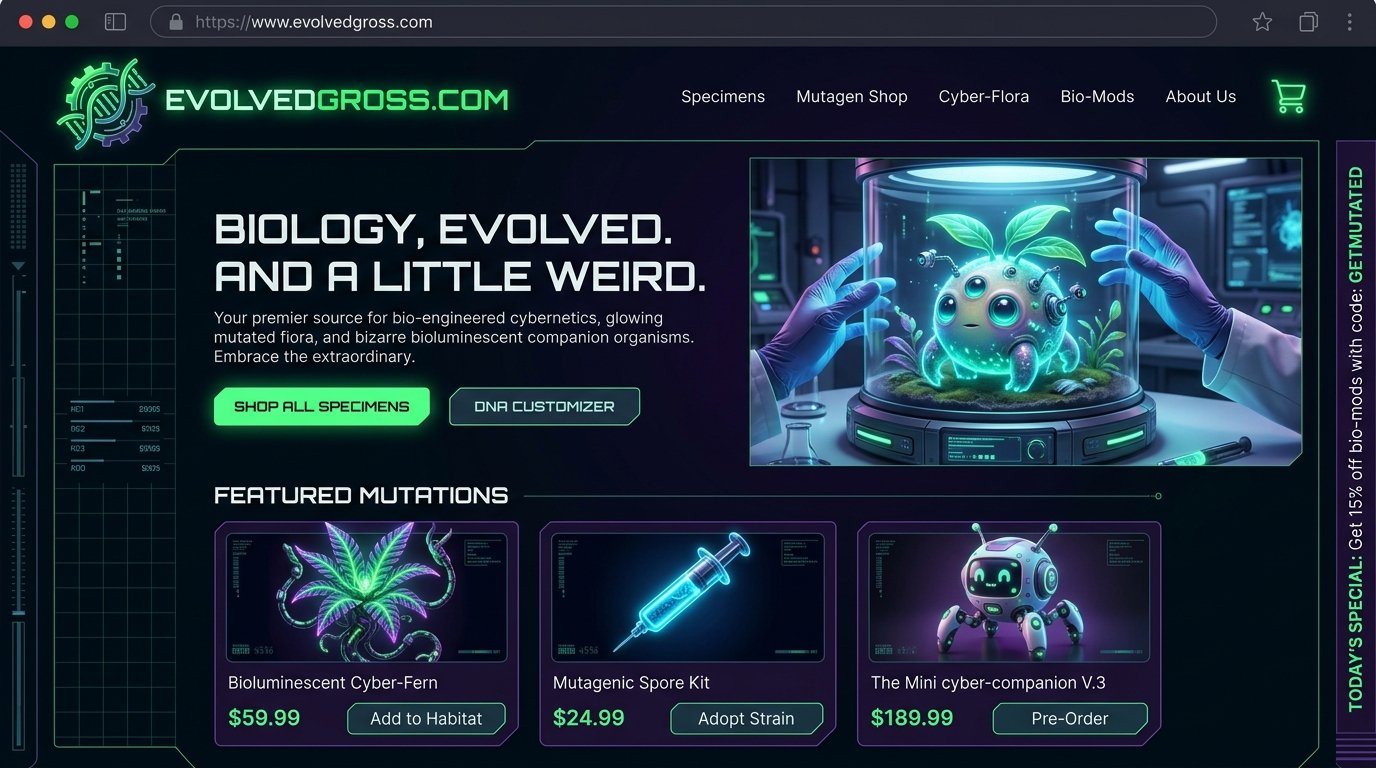
EvolvedGross.com: What You Should Know Before Visiting the Website
EvolvedGross.com is a website name that readers may search for to learn what the site offers, what its content covers, and whether it is safe and worth visiting. Before making any judgment about the website, it is important to confirm its actual purpose, inspect its published content, and check how it handles user privacy and security. A domain name alone cannot prove that a website is trustworthy, harmful, entertaining, or useful.
For anyone researching EvolvedGross.com, the most helpful approach is to separate verified information from assumptions. The site’s name may suggest a particular style or subject, but that does not establish its niche, ownership, quality, or intended audience. Those details need evidence from the website itself and other reliable records.
This article explains how to assess EvolvedGross.com, what information matters most, how to recognize warning signs, and how to decide whether a website deserves your time and trust.
What Is EvolvedGross.com?
EvolvedGross.com presents itself as a general-interest website focused on science, creativity, technology, and innovation. Its public About page describes a goal of bringing these subjects together and making ideas accessible to curious readers.
Evolvedgross
Rather than serving only one type of reader, the site’s stated focus spans several interests. Someone exploring artificial intelligence may also find material about digital art, scientific discoveries, or the ways technology affects daily life.
However, there is an important difference between a website’s stated mission and its proven quality. A description on an About page explains what a platform aims to do. It does not, by itself, show that every article is accurate, independently researched, regularly updated, or reviewed by experts.
Readers should therefore look at both the site’s overall purpose and the quality of individual articles.
The main subject areas
Science and discovery
This area may interest readers who want to understand space exploration, neuroscience, environmental science, physics, and other scientific subjects. Good science writing explains what researchers found, how they reached their conclusions, and what remains unknown.
Creativity and the arts
The site’s stated scope includes creative expression, digital art, storytelling, music, film, and the changing role of technology in creative work. Readers can use this type of content to explore ideas, understand artistic methods, and learn about new forms of expression.
Technology and innovation
This subject area covers themes such as artificial intelligence, machine learning, virtual reality, biotechnology, and emerging digital tools. Useful articles in this field should explain practical applications, limits, costs where relevant, and possible risks rather than simply praising new technology.
These categories reflect the site’s stated editorial focus, not an independent assessment of every page or a guarantee that each subject receives equal coverage.
Evolvedgross
+1
What Can Readers Expect From EvolvedGross.com?
The most reasonable expectation is a broad reading experience centered on ideas and information. The actual value depends on the articles available, how clearly they explain their subjects, and whether their claims are supported by reliable evidence.
A mix of subjects in one place
A broad content website can be useful when a reader wants to explore different interests without visiting a separate specialist publication for every topic.
For example, a reader interested in artificial intelligence might want to understand how AI tools work, how artists use them, and what concerns they raise about privacy or originality. A well-edited multidisciplinary publication can connect those questions in a way that makes the larger picture easier to understand.
The trade-off is depth. A general website may introduce a scientific or technical subject without covering it as fully as a specialist journal, professional organization, or dedicated news publication.
Use broad articles to build an initial understanding. For detailed research, check specialist sources and original documents.
Accessible explanations
Science and technology can be difficult to understand when articles rely on jargon, unexplained terms, or complex descriptions.
Clear writing makes these subjects easier to follow. It defines unfamiliar words, uses examples carefully, and separates established facts from predictions. It also explains why a discovery matters without suggesting that every new development will change the world.
When reading EvolvedGross.com, look for these qualities instead of assuming that a simple writing style automatically means the content is reliable.
Opportunities to discover new ideas
Readers often begin with one question and discover another subject along the way. An article about renewable energy, for example, may lead to questions about battery technology, materials science, public policy, and the environment.
This kind of exploration can make a general-interest publication useful for lifelong learning, school projects, creative work, and personal curiosity. The key is to treat interesting claims as starting points for further reading, especially when they involve scientific breakthroughs or predictions about the future.
A platform’s promises versus its performance
A website may describe its content as informative, original, expert-led, or carefully researched. These are meaningful claims only when readers can see evidence behind them.
Look for named authors, useful publication dates, direct references to research, clear corrections, and explanations of how conclusions were reached. If an article makes a major claim but gives no way to check it, do not treat polished writing as proof.
This distinction is especially important for a website that covers several fields, because the skills needed to evaluate a scientific study differ from those needed to judge an art review or a technology opinion piece.
Is EvolvedGross.com Legitimate and Safe to Use?
There are two separate questions here: whether a website is operating as a real online publication and whether its content, ownership, and technical practices deserve your trust.
EvolvedGross.com has public pages describing its purpose and providing contact information. That gives visitors some information about the site, but it does not establish who ultimately operates it or independently verify the accuracy of its content.
Evolvedgross
+1
A more important finding concerns the site’s homepage. During the review for this article on October 15, 2026, the retrieved homepage content included a very large block of unrelated search terms, including adult-content phrases, foreign-language queries, and unrelated names. This material does not fit the site’s stated focus on science, creativity, and technology.
Evolvedgross
That is a significant content-quality concern. It could reflect unwanted search-engine spam, a compromised page, a technical publishing problem, or another issue. The available evidence does not establish the cause, so it would be unfair to declare the site hacked or malicious based on this finding alone.
It does, however, mean that readers should exercise caution rather than assume that the website is a well-maintained publication.
What the available evidence tells us
Public website and contact pages
The site has a public About page, a Contact page, and navigation for its stated subject areas. These establish that public-facing pages exist, not that all other claims about the site are verified.
Unrelated content in the homepage response
The unrelated search terms found during the review raise questions about content management and quality. The underlying cause remains unconfirmed.
Independent trust and ownership
The reviewed pages do not, by themselves, establish independent editorial oversight, verified author credentials, or the identity of the people responsible for the site.
These findings do not prove that every page is unsafe. They also do not provide enough evidence to recommend the site without qualification.
Does HTTPS mean the website is safe?
No. HTTPS encrypts the connection between your browser and a website, helping protect information as it travels between them. It does not guarantee that the site’s owners are trustworthy, that its articles are accurate, or that every download is safe.
A secure connection is one useful technical check, not a complete website safety test.
The same principle applies to browser security warnings and third-party reputation services. A warning deserves attention, but a lack of warnings is not proof that a website is harmless. Reputation services may have incomplete information, particularly about changing websites and specific pages.
Should you create an account or share personal information?
Avoid sharing sensitive information until you have a clear reason to trust the service and understand how it uses your data.
For ordinary reading, an account may not be necessary. If the site asks you to register, examine its privacy policy and terms before providing an email address, name, phone number, payment details, or other personal information.
Be particularly cautious if a page asks for information that does not match its purpose. A general science article, for example, should not normally need your banking password or identity documents.
How to Evaluate EvolvedGross.com Before Relying on Its Content
A few practical checks can help you judge whether an article is worth reading, sharing, or using for research.
1. Check the author and publication date
Look for the author’s name, relevant background, publication date, and any later update date. These details help you decide whether the article has a clear source of responsibility and whether the information may be outdated.
A missing author does not automatically make an article false. However, anonymous or poorly attributed claims deserve more careful checking, particularly when they involve science, health, law, or money.
The publication date matters just as much. A basic explanation of gravity may remain useful for years, while information about AI regulations, software features, or current scientific research can change quickly.
2. Follow important claims back to the evidence
A strong article makes it possible to check its most important claims. Depending on the topic, that may mean linking to a scientific paper, a government report, a public dataset, an official announcement, or a named expert’s published work.
Do not judge evidence by the number of links alone. One directly relevant original study can be more useful than several articles repeating the same unsupported claim.
For scientific research, check whether the article accurately describes what the study examined. A study in cells does not automatically establish a treatment’s effect in people. A small survey does not necessarily represent an entire country.
For technology news, distinguish between a working product, a limited demonstration, a research prototype, and a future plan. These are different stages of development.
3. Look for a clear difference between fact and opinion
Opinion articles can be useful when they explain an argument fairly. They become misleading when personal views are presented as established facts.
Pay attention to the words an article uses. Terms such as may, could, and early evidence suggests can signal real limits in the available evidence. By contrast, claims that a new technology will definitely solve a major problem should prompt questions about supporting data.
Good writing does not remove uncertainty to sound convincing. It explains what is known and what remains open to debate.
4. Review the privacy policy and contact details
A privacy policy should explain what personal information a site collects, why it collects it, whether it uses cookies or tracking tools, and how information may be shared or retained.
EvolvedGross.com has a public Contact page listing an email address and a location. However, the existence of those details does not independently confirm the identity of the operator or the accuracy of the listed location.
Evolvedgross
If you need to contact the site about an account, payment, correction, or privacy issue, use the listed contact channel cautiously and avoid sending sensitive documents unless the request and recipient have been independently verified.
5. Watch for unexpected redirects, downloads, and pop-ups
A page that opens unexpected tabs, redirects you to unrelated domains, or repeatedly pushes downloads should be treated with caution.
Do not install browser extensions or software simply because an article tells you that they are needed to view content. Avoid opening unexpected file attachments, running downloaded programs, or granting unnecessary browser permissions.
If a page behaves strangely, close it and revisit only after checking the address and any available security warnings. You do not need to interact with suspicious pop-ups to read an article.
6. Check whether other reliable sources agree
For an important claim, compare the article with independent, relevant sources. The best source depends on the subject.
- Science: Original research, established scientific organizations, and independent expert reviews.
- Technology: Official product documentation, technical reports, and credible reporting that tests claims against evidence.
- Privacy and security: Government guidance, recognized security organizations, and technical documentation.
- Arts and culture: Original works, creator statements, reputable criticism, and properly attributed reporting.
Agreement is most meaningful when sources reach their conclusions independently. Several websites repeating identical wording may all depend on the same original claim.
Who Might Find EvolvedGross.com Useful?
The website’s stated subject areas may appeal to several kinds of readers. Whether it is useful in practice depends on the quality and relevance of the specific content they find.
- Students: General explanations can help introduce topics for class discussions or early research. Important facts should still be checked against textbooks, academic research, or trusted educational sources.
- Technology enthusiasts: Articles about artificial intelligence, digital tools, and innovation may help readers discover subjects they want to explore further.
- Creative professionals: Material about digital art, storytelling, and technology may offer ideas for personal projects, provided any factual claims are checked.
- General readers: People who enjoy learning about science and culture may appreciate a website that brings different interests together.
- Researchers and professionals: The site may serve as a starting point for discovering topics, but specialist publications and original documents are better choices for evidence that must be accurate and complete.
These are potential audiences based on the website’s stated focus, not verified user demographics or proof of reader satisfaction.
EvolvedGross.com Compared With Specialist Websites
The best place to find information depends on the question you need to answer. A general-interest site and a specialist source serve different purposes.
| Information need | Most useful approach |
|---|---|
| A quick introduction to a new topic | Start with a clear, well-sourced general article. |
| Evidence behind a scientific claim | Read the original study and relevant expert reviews. |
| Current software features | Consult official product documentation and recent independent reporting. |
| Advice involving health, money, or law | Use authoritative sources suited to the specific issue and jurisdiction. |
| Creative inspiration | Explore relevant articles, original works, and thoughtful criticism. |
| A claim that could affect an important decision | Verify it with multiple independent, authoritative sources. |
EvolvedGross.com should be judged by the same standards as any other online publication. Its broad subject range may be convenient, but convenience should not replace evidence.
Common Mistakes to Avoid When Researching EvolvedGross.com
Several simple mistakes can lead readers to trust a website too quickly or dismiss it without enough evidence.
Assuming a professional design proves credibility
A website can have attractive layouts, polished writing, and organized menus without providing reliable information. Editorial quality depends on research, attribution, accuracy, and responsible updates, not appearance alone.
Treating every article as equally reliable
A website may publish useful introductory material alongside articles that need correction or stronger evidence. Evaluate the specific article instead of assuming that the entire site is either excellent or worthless.
Confusing search visibility with authority
A website appearing in search results does not mean a search engine has certified its accuracy. Search visibility and editorial credibility are different things.
Likewise, popularity estimates, website traffic figures, and domain-rating scores do not establish whether an article is factually correct or safe to use.
Ignoring warning signs because the site has contact information
Contact details are helpful, but they are only one part of a wider assessment. Unexpected content, suspicious redirects, unclear ownership, and unsupported claims still deserve attention.
For EvolvedGross.com specifically, the unrelated material found in the retrieved homepage content makes it particularly important to examine the current page carefully before relying on it.
Frequently Asked Questions
1. What is EvolvedGross.com?
EvolvedGross.com presents itself as a general-interest content website covering science and discovery, creativity and the arts, and technology and innovation. Its public pages describe this mission, but the quality of individual articles should be assessed separately.
Evolvedgross
2. Is EvolvedGross.com safe to visit?
The available evidence is not enough to certify the site as safe or declare it malicious. The homepage content retrieved during the October 15, 2026, review contained extensive unrelated search terms, which raises a concern about content quality or site integrity. Avoid downloads, suspicious redirects, and requests for sensitive information.
3. Does EvolvedGross.com publish reliable information?
That depends on the article. Check the author’s credentials, publication date, supporting evidence, and agreement with independent sources. Do not treat the site’s stated mission as proof that every claim is accurate.
4. Does EvolvedGross.com cover science and technology?
Yes. Its public About page describes science and discovery, creativity and the arts, and technology and innovation as its main subject areas. This describes the site’s stated focus rather than independently confirming the depth or accuracy of its coverage.
Evolvedgross
5. Should you create an account on EvolvedGross.com?
Only if you have a clear reason to do so and are comfortable with the site’s privacy practices. Read its privacy policy and terms, check what information registration requires, and avoid sharing sensitive details unless the service and its purpose have been verified.
6. Can EvolvedGross.com be used for academic research?
It may help you discover a topic or understand basic concepts, but verify important claims against original research, academic publications, and trusted educational sources. Do not cite an article as authoritative merely because it appears on a dedicated website.
Conclusion
EvolvedGross.com presents itself as a platform for readers interested in science, creativity, and technology. That broad focus could make it useful for exploring new ideas, but its stated purpose alone does not establish its editorial reliability.
The most important consideration is the quality of the actual content. The unrelated search terms found in the retrieved homepage material on October 15, 2026, are a reason for caution, although they do not establish the cause or prove malicious activity.
If you choose to explore the site, verify important claims, review its privacy practices, and avoid suspicious downloads or requests for personal information. For decisions that depend on accurate scientific, technical, financial, or legal information, use authoritative sources and independent evidence. A website earns trust through what it demonstrates, not simply through what it claims.