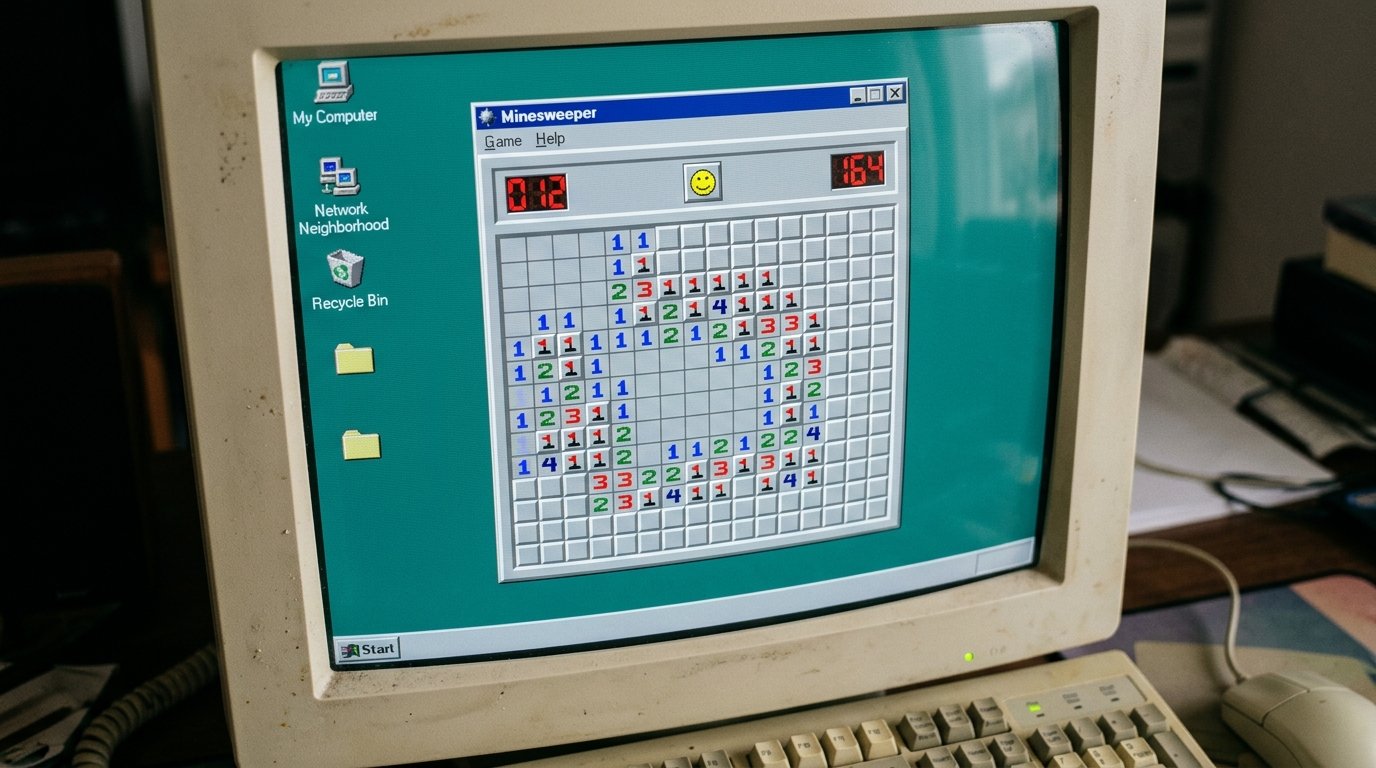
Minesweeper: How to Play, Rules, Tips, and Strategies
Minesweeper is a logic puzzle game in which you uncover safe squares while avoiding hidden mines. The key to playing Minesweeper is to use the numbers on the board to work out where mines may be hiding. You do not need to open every square. Instead, you must uncover every safe square to win. The game may look confusing at first, but its basic rules are easy to learn. With a little practice, you can read clues, find safe moves, and solve more boards without guessing.
Minesweeper is available in different versions, including Microsoft Minesweeper and mobile games. Some versions offer classic puzzles, daily challenges, different difficulty levels, and extra game modes. The basic rules remain similar, although controls and special features may differ between games.
What Is Minesweeper?
Minesweeper is a single-player puzzle game played on a grid of covered squares. Some squares hide mines, while others are safe to open.
Your goal is to uncover all safe squares without opening a square that contains a mine. Each time you open a safe square, the game gives you information that can help you make your next move.
A square may reveal a number or an empty space. The number tells you how many mines are touching that square. An empty square means there are no mines in its neighboring squares in the standard version of the game.
You use these clues to solve the board one move at a time.
For example, imagine that you open a square and see the number 1. This means exactly one of its neighboring squares contains a mine. You must study the covered squares around it to find the possible mine location.
If another number shows that all its neighboring mines have already been identified, the remaining covered neighbors are safe to open.
How Does Minesweeper Work?
The game starts with a board full of covered squares. You cannot see which squares contain mines.
When you open a square, one of several things can happen.
- A number appears: The square is safe, and the number shows how many nearby squares contain mines.
- An empty space appears: No neighboring square contains a mine, so the game usually opens nearby safe areas automatically.
- A mine appears: In standard play, opening a mine ends the game.
Some versions make the first click safe, while others may use different rules. Check the instructions for the version you play rather than assuming every game works in exactly the same way.
The game also tracks progress. Depending on the version, you may see a mine counter, a timer, a flag count, or a score.
The mine counter usually shows how many mines remain unflagged. It is a useful guide, but it does not tell you which covered squares are dangerous. You must use the clues on the board to work that out.
What Is the Goal of Minesweeper?
The main goal is to reveal every square that does not contain a mine.
You do not always need to place a flag on every mine to win. In many classic versions, the game ends when all safe squares have been opened.
Flags help you remember where you believe mines are located. They are useful, but they do not prove that a square contains a mine.
A correct flag can help you avoid a dangerous move. A wrong flag can cause confusion and may lead you to open the wrong square later.
The safest approach is to flag a square when the clues support your decision. If you are unsure, study the nearby numbers before marking it.
Winning Minesweeper is not only about finding mines. It is also about knowing which squares are safe and using the information you already have.
Understanding Minesweeper Numbers
Numbers are the most important clues in Minesweeper. Each number tells you the exact number of mines in the surrounding squares.
In the standard game, a square can have up to eight neighbors: one above, one below, one on each side, and four diagonal neighbors.
The number includes diagonal squares. This is important because a mine does not have to sit directly beside a number in a straight line.
What Does the Number 1 Mean?
A 1 means that exactly one of the square’s neighboring cells contains a mine.
It does not tell you which neighbor contains the mine. You need more information to identify its location.
For example, suppose a 1 touches only one covered square. That covered square must contain a mine because it is the only possible location for the one mine.
Once you identify the mine, you can look at the other numbers nearby. They may now show which squares are safe.
What Does the Number 2 Mean?
A 2 means that exactly two neighboring squares contain mines.
If you can identify one of those mines, you know that one more mine must be among the remaining covered neighbors.
If two neighboring mines have already been identified, every other neighboring square must be safe, as long as your flags are correct.
What Do Numbers 3, 4, 5, 6, 7, and 8 Mean?
These numbers follow the same rule.
- A 3 means three neighboring squares contain mines.
- A 4 means four neighboring squares contain mines.
- A 5 means five neighboring squares contain mines.
- A 6 means six neighboring squares contain mines.
- A 7 means seven neighboring squares contain mines.
- An 8 means all eight neighboring squares contain mines.
Large numbers often appear in crowded parts of the board. They can be useful clues because they limit how many nearby squares can be safe.
You do not need to memorize special rules for every number. Learn what each number means, count the covered neighbors, and compare the clues.
What Does an Empty Square Mean?
An empty square in classic Minesweeper has no mines in its neighboring squares.
Many versions automatically open the surrounding safe area when you uncover an empty square. This can reveal a large part of the board in one move.
The newly opened area may contain more empty squares and numbered squares. Each new number gives you extra information.
When a large area opens, take a moment to study it. Do not rush to click the next covered square. The new clues may already show you several safe moves.
How to Play Minesweeper Step by Step
If you are new to Minesweeper, begin with a small board and focus on learning the clues. You do not need to play quickly. A careful player can learn more from each move than someone who clicks without thinking.
Step 1: Choose an Easy Game
Start with the beginner level if your version offers it. A smaller board is easier to study because fewer squares are covered.
Some classic versions use a 9-by-9 board with 10 mines for beginner play. Other versions may use different board sizes or settings.
The goal at this stage is to understand the numbers, not to set a speed record.
Step 2: Open Your First Square
Click or tap a covered square to reveal it.
If it is safe, you will see a number or an empty space. If it is empty, the game may uncover a larger area around it.
Some versions guarantee that your first click is safe. Others may work differently, so check the rules of your chosen game.
Step 3: Study the Numbers
Look at each revealed number and count its covered neighbors.
A number 1 needs one neighboring mine. A number 2 needs two neighboring mines. Compare these needs with the squares around each clue.
Do not focus on only one number. Two or more nearby numbers may help you identify the exact location of a mine.
Step 4: Mark Mines You Can Prove
When the clues show that a covered square must contain a mine, place a flag on it.
On many desktop versions, you can right-click to place a flag. On phones, you may need to long-press a square or switch to flag mode.
Controls vary between games, so follow the instructions on your screen.
Remember that a flag is a marker, not proof supplied by the game. You are responsible for placing it correctly.
Step 5: Open Squares You Know Are Safe
Once you have identified a mine, look at the other numbers that touch it.
If a number already has all the mines it requires accounted for, its remaining covered neighbors are safe.
Open those squares one at a time. Each new number may reveal another safe move.
Step 6: Repeat the Process
Continue using the clues until all safe squares are open.
If you reach a point where no safe move is clear, compare the clues across the whole area. You may have missed a connection between two numbers.
Some boards require a guess when the available clues cannot distinguish between possible mine locations. This depends on the board and the rules of the version you play.
Step 7: Check the Result
When every safe square has been opened, you win in standard Minesweeper.
If you open a mine, the game normally ends. You can then start a new round and review the move that caused the loss.
Do not treat every loss as a failure. Reviewing a board can help you recognize patterns and make better choices next time.
Basic Minesweeper Rules You Should Know
Understanding the rules will help you avoid mistakes and make better use of the clues.
Rule 1: Every number is exact. A 2 always means two mines are in the eight surrounding squares, or fewer neighboring squares near an edge or corner.
Rule 2: Diagonal squares count. A mine can be above, below, beside, or diagonally next to a number.
Rule 3: Flags are optional in many versions. They help you remember mine locations, but you can win without flagging every mine if all safe squares are revealed.
Rule 4: Empty areas provide information. A blank square has no neighboring mines in the standard game. The automatic opening of nearby safe squares can reveal useful clues.
Rule 5: A covered square is not automatically dangerous. It may contain a mine, but it may also be safe. Use the surrounding numbers to decide.
Rule 6: Not every board can be solved with certainty at every step. Some games create positions where more than one mine arrangement fits the clues. If the game does not guarantee logic-only boards, you may have to choose between uncertain options.
Rule 7: Game features can differ. Timers, mine counters, hints, first-click protection, and special modes depend on the version. Learn the rules of the game you are playing.
These rules form the base of every classic Minesweeper strategy.
Simple Minesweeper Strategies for Beginners
Once you understand the numbers, you can use a few simple methods to solve boards more safely.
Strategy 1: Use the One-Square Rule
Suppose a number 1 touches just one covered square. That covered square must contain a mine.
This is one of the easiest deductions in Minesweeper. You do not need to guess because the number gives you enough information.
After marking the mine, check the other numbers nearby. A number may now have all its mines identified, which can show that its remaining covered neighbors are safe.
Strategy 2: Count Flags Around Each Number
Flags can make a board easier to read.
If a number 2 touches two squares that you have correctly flagged, its other covered neighbors must be safe.
However, this method only works if the flags are correct. A misplaced flag can make a safe square look dangerous or a dangerous square look safe.
If a deduction seems wrong, check your earlier flags instead of adding more.
Strategy 3: Look for Overlapping Clues
Two nearby numbers often share some of the same covered squares. This overlap is one of the most useful parts of Minesweeper.
Imagine that one number needs one mine among three covered squares. A nearby number also needs one mine, but it touches only two of those squares and shares part of the same area.
By comparing the two clues, you may be able to work out which squares can contain the mine and which must be safe.
The key is to compare the covered squares that each number touches, rather than treating every number as a separate puzzle.
Strategy 4: Work From Known Information
When a board becomes crowded, do not click a random square just to make progress.
Instead, look for a number whose neighboring mines are already known. Use that clue to open safe squares and gain more information.
Then check the new numbers. A safe move in one area may help you solve another area connected to it.
This approach can make a difficult board feel more manageable.
Strategy 5: Be Careful With Corners and Edges
Corners and edges have fewer neighboring squares than cells in the middle of the board.
A corner has only three neighboring cells. An edge cell that is not a corner has five. A cell in the middle can have eight.
Fewer neighbors can make some clues easier to solve because there are fewer possible mine locations to consider.
However, corners are not always safe. Never open a square just because it is on an edge.
Strategy 6: Learn Common Patterns
As you play more games, you may notice that certain number arrangements appear often.
For example, a row of clues may help you identify a mine along an edge. In some common patterns, a 1-2-1 sequence next to a line of covered squares can show which positions contain mines, provided the surrounding layout matches the pattern.
Do not memorize a pattern without checking its position and neighboring squares. A similar-looking arrangement can mean something different when the covered cells or nearby clues change.
The best habit is to understand why a pattern works. Then you can use the same reasoning in new situations.
Strategy 7: Separate Safe Moves From Uncertain Moves
When you study a board, sort possible moves into two groups:
- Certain moves: The clues prove that a square is safe or contains a mine.
- Uncertain moves: More than one possible mine arrangement fits the available clues.
Always take a clear, safe move when one is available. It may reveal new numbers that help solve the uncertain area.
If no safe move remains, you may need to make a choice unless your game offers a hint or uses a board designed to be solved without guessing.
This habit helps you avoid taking unnecessary risks.
Common Minesweeper Patterns Explained
Patterns can help you solve a board faster, but you should always check the nearby clues before using them.
The 1-1 Pattern
Two neighboring 1s may share covered squares. The first step is to identify which squares are shared and which belong to only one number.
If one clue already has its mine accounted for, any other covered neighbors of that clue must be safe. This may help you solve the next number.
A pair of 1s alone does not always reveal the mine location. The surrounding board matters.
The 1-2-1 Pattern
A 1-2-1 sequence can be useful when the numbers sit along a straight edge and the covered squares form a matching row on one side.
In the standard pattern, the two squares beside the outer 1s contain mines, while the square beside the middle 2 is safe. This conclusion depends on the exact layout and on there being no extra covered squares that change the clues.
Before applying this pattern, check that the numbers and covered squares match the expected arrangement.
The 1-2 Pattern
A 1 beside a 2 can sometimes help you identify a mine when both clues share covered neighbors.
First, count the squares touching each number. Then compare how many mines each number still needs.
If the 1 has only one possible mine location, mark it. You can then use that information to solve the 2.
This method is more reliable than trying to memorize a pattern without understanding the clues.
How to Avoid Common Minesweeper Mistakes
Even experienced players can make errors when they rush. These simple habits can help you avoid common problems.
Clicking Too Quickly
Fast clicks can lead to mistakes, especially when several numbers appear close together.
Pause after each new area opens. Check whether the new clues reveal safe squares before moving elsewhere.
Forgetting Diagonal Neighbors
A number counts diagonal squares as well as squares directly above, below, and beside it.
Forgetting the diagonal positions can lead to incorrect mine counts. When in doubt, check all eight neighboring cells, or all the cells available near an edge or corner.
Placing Flags Without Proof
A covered square may look like a likely mine, but that does not make it certain.
Use the clues to confirm a mine location whenever possible. If you place a flag too early, you may build later decisions on a false assumption.
Ignoring Earlier Numbers
Do not study only the newest number on the board.
An older clue may connect to the same covered squares and provide the missing information. Looking at several numbers together can reveal moves that are not clear from a single clue.
Guessing Before Checking Other Areas
Sometimes one part of the board seems impossible to solve. Another part may still contain an obvious safe move.
Explore the areas where the clues are clear first. The information you uncover may help with the difficult section.
Rushing to Beat the Timer
A timer can make you feel that every move must be fast. However, a quick mistake may end the game.
When learning, focus on accuracy. You can work on speed after you become more comfortable reading the board.
Minesweeper Difficulty Levels
Many classic versions offer beginner, intermediate, and expert levels. The board size and number of mines depend on the version.
| Level | Common classic board | Mines | What to expect |
|---|---|---|---|
| Beginner | 9 × 9 | 10 | A smaller board for learning the rules |
| Intermediate | 16 × 16 | 40 | More clues and a larger area to study |
| Expert | 30 × 16 | 99 | More complex patterns and more difficult decisions |
These are common classic settings, not a rule for every Minesweeper game. Some versions let you change the board size or choose a custom number of mines.
Beginner Level
Beginner mode is a good place to learn how numbers work.
You can focus on finding single-mine clues, identifying safe squares, and understanding how empty areas open. A small board also makes it easier to review your mistakes.
Intermediate Level
Intermediate mode gives you more squares and more clues to manage.
You will need to compare several numbers at once. It becomes more important to remember which mines are confirmed and which squares remain uncertain.
Expert Level
Expert mode contains a larger board and more mines in common classic settings.
The number of possible mine locations is greater, and some sections can be harder to solve. You may need to use several clues together to identify a safe move.
Expert mode is easier to approach after you have developed good habits on smaller boards.
Can You Play Minesweeper Online for Free?
Yes. You can play Minesweeper online through game websites, and some versions are available as apps for computers and phones.
Microsoft offers a version called Microsoft Minesweeper. Its official game experience includes Classic Mode, different levels of challenge, and additional features that may vary by platform.
Before choosing a game, consider what you want from it.
- Classic gameplay: Look for a version that uses the traditional grid, numbered clues, and hidden mines.
- Beginner-friendly controls: Choose a game with clear instructions and easy-to-use controls.
- Mobile play: Check whether the game supports touch controls and lets you zoom in on the board.
- Daily challenges: Some versions provide new puzzles or tasks to complete.
- Custom difficulty: Certain games allow you to change the board size or mine count.
You should also check whether the game includes ads, in-app purchases, or extra features that require payment. Availability and pricing can vary by app and platform.
Is Minesweeper Available on Mobile?
Yes. Minesweeper games are available for mobile devices, including Android phones and tablets. The exact features depend on the app.
The basic goal remains the same: open safe squares and avoid mines.
The main difference is how you control the board. On a computer, you may use a left-click to open a square and a right-click to place a flag. On a phone, you may tap to open a square and long-press to flag it, or use a separate flag mode.
Some mobile versions also support zooming, hints, or different board sizes.
Before starting, learn how the app handles opening and flagging squares. This is important because an accidental tap can reveal a square you meant to mark.
Does Minesweeper Require Luck or Logic?
Minesweeper relies heavily on logic, but some boards may also require a guess.
The numbers give exact information about the mines around each revealed square. When that information identifies a safe move, you can make a decision based on logic.
However, the clues do not always provide enough information to identify every mine location. Two different mine arrangements may fit the same visible numbers.
If that happens, the game may require you to choose between uncertain squares. Some versions offer hints or use board-generation rules designed to reduce or remove guessing.
This is why it is useful to separate confirmed information from assumptions. You can solve many situations through careful counting, but you should not expect every version or every board to be fully solvable through logic alone.
Does Playing Minesweeper Improve Your Skills?
Minesweeper gives you practice with counting, pattern recognition, and logical reasoning. Each move asks you to study the available information and decide what it means.
For example, you may need to compare two numbers, count their shared neighbors, and work out which squares must be safe.
The game also encourages careful decision-making. If you open a square without checking the clues, you may lose progress. If you study the board first, you may find a safer move.
However, playing Minesweeper does not guarantee better performance in school, work, memory, or other mental tasks. It is best viewed as a puzzle that lets you practise specific reasoning skills while enjoying a game.
Frequently Asked Questions
What is the main rule of Minesweeper?
The goal is to uncover every safe square without opening a mine. Each number tells you how many mines are in the surrounding squares, including diagonals.
How do you win Minesweeper?
Open every square that does not contain a mine. In many classic versions, you do not have to flag every mine to win.
What does a 1 mean in Minesweeper?
A 1 means exactly one neighboring square contains a mine. You must use the other clues to determine which square it is.
Is the first click always safe?
Not in every version. Some Minesweeper games protect the first click, while others may use different rules. Check the instructions for your chosen game.
Can you play Minesweeper without guessing?
Sometimes. Many boards can be solved through logic, but some versions may create positions where the clues do not reveal a certain move. Games designed to avoid guessing may use special board-generation rules.
Is Minesweeper free to play?
Many online and mobile versions offer free play. Some include advertisements, in-app purchases, or paid features, so check the terms of the version you choose.
Conclusion
Minesweeper becomes easier when you understand how the numbers work and take time to study each clue. Start with a beginner board, mark mines only when the evidence supports your decision, and open squares that you know are safe. As you practise, learn to compare nearby numbers and recognize common patterns.
You will not be able to solve every board without guessing, but careful play can help you make better decisions and enjoy the challenge. Focus on understanding the clues first, and let speed come with experience.