
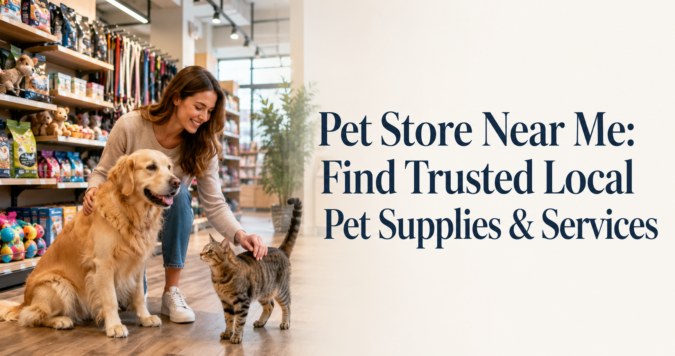

Searching for a pet store near me usually starts with a practical need. You may have run out of pet food, need a better harness, want aquarium supplies, or simply need expert help choosing the right product for an animal in your care. Yet the closest store is not automatically the best one.
A dependable pet shop should combine product quality, knowledgeable staff, sensible pricing, clean facilities, clear policies, and products appropriate for the animals it serves. Location and opening hours matter, but so do freshness, product storage, customer service, and the store’s approach to animal welfare.
This guide explains how to compare nearby pet stores, what products and services to expect, how to evaluate quality before buying, and which warning signs deserve attention.
A useful pet store does more than fill shelves—it helps owners make safer, more appropriate choices for their animals.
What to Look for in a Pet Store Near Me
A local pet shop should make everyday pet ownership easier rather than more complicated. For most customers, the strongest stores perform well across several areas instead of relying on one advantage such as low prices or a large building.
The first things worth checking are:
- Product quality and selection
- Food storage and expiration dates
- Staff knowledge
- Cleanliness
- Pricing transparency
- Availability of species-specific products
- Return and exchange policies
- Accessibility and opening hours
- Grooming or other services, where offered
- Animal welfare standards if live animals are present
Your priorities will also depend on the animal you care for. A dog owner buying a replacement leash has very different requirements from an aquarium keeper looking for filtration equipment or a cat owner managing a specialized diet.
That is why the best nearby shop is the one that matches your actual needs rather than simply appearing first in a map result.
How We Evaluate Local Pet Stores
When comparing stores, it helps to use consistent standards. A useful evaluation should focus on factors that affect product suitability, convenience, animal wellbeing, and the overall customer experience.
Location is important, particularly when you need food or another essential item quickly. However, distance should not outweigh basic quality.
We would generally give greater importance to product standards, knowledgeable service, transparency, cleanliness, and appropriate animal-care practices. Convenience factors such as parking, delivery and opening hours become important after those fundamentals have been established.
A store with hundreds of products is not necessarily better than a smaller retailer with carefully selected inventory and staff who understand what they sell.
Pet Store Comparison Table
| Factor | What to Check | Why It Matters |
|---|---|---|
| Location | Distance, parking, accessibility | Makes routine shopping easier |
| Pet food | Brand choice, package condition, dates | Helps maintain consistent feeding |
| Product range | Food, toys, bedding, grooming and accessories | Reduces the need for multiple shopping trips |
| Staff knowledge | Clear, practical product guidance | Helps customers select appropriate items |
| Cleanliness | Floors, shelves, cages and displays | Reflects general store management |
| Pricing | Visible prices and clear promotions | Makes comparison easier |
| Specialist supplies | Aquarium, bird, reptile or small-pet products | Important for species-specific needs |
| Services | Grooming, delivery, pickup or other services | Adds convenience where relevant |
| Returns | Clear return and exchange conditions | Important for unsuitable or defective products |
| Animal welfare | Housing, water, hygiene and responsible handling | Essential where live animals are kept |
This table provides a better starting point than judging a shop solely by star ratings.
Product Quality and Safety
Product quality should be one of the strongest considerations when choosing a pet store near me.
Packaging should be intact. Food bags should not be torn, wet or damaged, and canned products should not appear compromised. Expiration or best-before information should be readable where applicable.
Shelves should also appear reasonably organized. Poor storage can be more important than the appearance of the packaging itself.
For example, food that requires particular storage conditions should be handled according to the manufacturer’s directions. Treats and other consumable products should not be displayed in dirty or obviously unsuitable conditions.
When buying toys, leads, harnesses, feeding accessories or habitat equipment, inspect construction quality as well as price.
A cheap product that quickly breaks may provide poor value and can sometimes create avoidable risks.
Pet Food Selection
Food is one of the main reasons people search for nearby pet retailers.
A strong store should normally provide several choices covering the animals it claims to serve. A general pet retailer may stock:
- Dry and wet dog food
- Dry and wet cat food
- Treats
- Puppy and kitten products
- Senior-pet formulas
- Small-animal foods
- Bird foods
- Fish foods
- Selected species-specific diets
Availability varies significantly between stores.
More choice is useful, but an enormous food section is not automatically evidence of higher quality. What matters is whether the store carries appropriate products, stores them correctly, rotates inventory and gives customers enough information to make informed choices.
Pet nutrition can become complicated when an animal has allergies, digestive problems, medical conditions or another specialized dietary need. Store employees may help you locate products, but medical dietary decisions should be discussed with a qualified veterinarian.
A retailer should not present ordinary sales advice as veterinary diagnosis.
How to Compare Pet Food Without Being Misled
Pet food packaging contains a large amount of marketing language. Terms on the front of the package can sound impressive without telling you everything necessary to determine whether that food suits your animal.
Instead of choosing solely from packaging claims, consider:
- The intended species
- Life stage
- Feeding directions
- Ingredient information
- Nutritional adequacy information where applicable
- Package size
- Storage instructions
- Your pet’s existing diet
- Advice from your veterinarian when medical needs are involved
Changing diets unnecessarily can also cause problems for some animals. If you are buying a different product because your usual food is unavailable, consider whether an abrupt switch is appropriate.
This is one area where a knowledgeable local shop can be useful: staff may know whether another package size or equivalent product from the same range is available.
Pet Supplies and Accessories
A well-stocked pet store near me should cover routine supplies rather than focusing almost entirely on food.
For dogs, useful categories can include:
- Collars
- Harnesses
- Leads
- Beds
- Bowls
- Toys
- Training accessories
- Grooming tools
- Travel products
Cat sections may include:
- Litter
- Litter trays
- Scratchers
- Beds
- Carriers
- Toys
- Feeding accessories
- Grooming products
Small animals, birds, reptiles and aquatic animals require different products, so specialist selection matters.
The basic question is not whether a store has many shelves. It is whether those shelves contain suitable options for your type of pet.
Choosing Toys Carefully
Toys can provide exercise, engagement and enrichment, but they should be selected with the individual animal in mind.
For dogs, size and chewing behavior matter. A product suitable for a small, gentle dog may not be appropriate for a larger animal that destroys toys quickly.
Cat toys should also be inspected for loose or damaged components, particularly after repeated use.
For birds and small animals, materials, dimensions and placement can matter because the animal may chew, climb or interact with the item differently from a dog or cat.
No pet toy should be assumed to be indestructible.
Checking toys regularly for wear is a simple habit that can prevent a minor product problem from becoming more serious.
Collars, Harnesses and Leads
Buying walking equipment in person can have one major advantage: you can inspect construction and understand sizing before paying.
A good pet retailer should provide clear size information rather than simply labeling products as small, medium or large without measurements.
When comparing harnesses and collars, consider:
- Adjustability
- Fastener quality
- Material
- Stitching
- Comfort
- Intended use
- Reflective elements where useful
- Manufacturer sizing guidance
Correct fit is more important than appearance.
If you are unsure about sizing, ask a knowledgeable employee for guidance and follow the product manufacturer’s instructions.
Aquarium and Fish Supplies
Aquarium owners often have more specialized shopping requirements.
A general pet shop may carry fish food and basic aquarium products, while a specialist aquatic retailer may stock a much broader range of:
- Aquariums
- Filters
- Filter media
- Pumps
- Lighting
- Heaters
- Water-testing products
- Substrate
- Decorations
- Maintenance tools
- Fish foods
Equipment should be chosen based on the aquarium setup and species being kept rather than simply price.
If a store sells live fish, observe the aquariums before purchasing anything. Tanks should appear appropriately maintained, and staff should demonstrate reasonable knowledge about the animals they sell.
Be cautious when complex aquarium questions receive extremely simplistic answers. Water chemistry, stocking, filtration and species compatibility can require more knowledge than a basic product recommendation.
Bird, Reptile and Small-Animal Supplies
Specialist animals require specialist care.
A retailer serving birds, reptiles, rabbits, guinea pigs, hamsters or similar animals should provide more than generic food.
Depending on the species, customers may need appropriate:
- Housing
- Bedding or substrate
- Feeding equipment
- Enrichment
- Lighting
- Heating equipment
- Habitat accessories
- Cleaning supplies
- Species-appropriate foods
Some products that appear similar can have very different uses.
Reptile habitat equipment is a good example. Heating and lighting requirements vary by species, so buying equipment without understanding the animal’s needs can lead to inappropriate setups.
A responsible retailer should recognize when a question requires specialist or veterinary guidance rather than guessing to complete a sale.
Staff Knowledge and Customer Service
Staff expertise can separate an excellent store from an ordinary retailer.
Knowledgeable employees do not need to know every detail about every species. What matters is whether they provide clear information within their area of competence and admit when they do not know something.
Good staff behavior includes:
- Asking what type of pet you have
- Clarifying size, age or intended use
- Explaining differences between products
- Checking labels or manufacturer information when necessary
- Avoiding unsupported medical claims
- Referring customers to veterinary professionals when appropriate
Poor service often takes the opposite form: rushing customers toward expensive products, making confident claims without explanation, or treating every animal as if its needs were identical.
Trustworthy advice sometimes includes saying, “This product is probably not suitable for your pet.”
Cleanliness and Store Conditions
Cleanliness is one of the easiest things to assess in person.
You do not need laboratory-level standards from an ordinary retail environment, but the shop should appear properly maintained.
Look at:
- Floors
- Shelving
- Product displays
- Food-storage areas
- Grooming areas
- Animal enclosures, if present
- Odor control
- General organization
A busy shop can become temporarily untidy. That is different from persistent dirt, poorly maintained animal areas, spilled food that appears ignored or generally careless management.
If a business sells live animals, cleanliness becomes even more important.
Animal Welfare Standards
Not every pet retailer sells animals. Many focus entirely on supplies, grooming or services.
Where animals are available, welfare should take priority over attractive displays or convenience.
Customers can observe basic conditions without pretending to conduct a professional inspection.
Animals should have appropriate access to essentials such as clean water, suitable housing and reasonable hygiene according to their species.
Staff should also be able to provide meaningful information about care requirements.
Be cautious of businesses that treat living animals like impulse purchases.
Responsible ownership involves long-term costs, daily care, suitable housing and veterinary needs. Retailers should not hide those realities merely to make a sale.
Grooming Services
Some stores include dog or cat grooming facilities.
If grooming is one reason you searched for a pet store near me, evaluate the service separately from the retail shop.
Ask about:
- Available grooming services
- Appointment requirements
- Pricing
- How long appointments generally take
- What information is required about the pet
- Handling procedures
- Cancellation policies
- What happens if the groomer identifies a health concern
Cleanliness also matters in grooming areas.
Remember that grooming professionals are not substitutes for veterinarians. A groomer may notice something unusual, but diagnosis and medical treatment belong with qualified veterinary professionals.
Pricing and Value
The cheapest shop is not necessarily the best, but neither should customers ignore price.
For products that are identical across retailers, comparison is straightforward. Check the same brand, exact package size and product model rather than assuming two similar-looking items are equivalent.
Consider total value as well.
A store slightly farther away may provide:
- Better product availability
- Larger package sizes
- Loyalty discounts
- More knowledgeable service
- Easier parking
- Pickup options
- Reliable inventory
Conversely, driving a long distance to save a tiny amount on a low-cost item may not make practical sense.
Value depends on the complete shopping experience.
Local Pet Store vs Large Pet Retail Chain
Neither business model is automatically superior.
Independent pet stores can sometimes provide highly specialized knowledge, carefully selected products and personal service. Large chains may offer broader inventory, extended opening hours or more standardized services.
The better choice depends on the individual location.
A poorly managed independent shop does not become excellent simply because it is locally owned. Likewise, a chain location should not be judged solely by the company name.
Evaluate the actual store you plan to use.
Local Pet Store vs Online Shopping
Online pet retailers provide convenience, particularly for repeat purchases of heavy food bags, litter and bulky supplies.
Physical shops have different strengths.
A local store allows you to:
- Inspect products before buying
- Check sizing
- Compare textures and construction
- Get an item immediately
- Ask staff questions
- Avoid waiting for shipping
Online ordering can be useful when selection or delivery convenience matters more.
Many pet owners use both.
Routine supplies may be ordered online, while urgent purchases, unfamiliar products or items requiring closer inspection are bought locally.
There is no reason to treat this as an either-or decision.
How to Find a Pet Store Near Me
Local search tools make finding stores straightforward, but search results should be treated as a starting point.
You can search maps or a search engine using terms such as:
- Pet store near me
- Pet supplies near me
- Dog food near me
- Cat food near me
- Aquarium store near me
- Reptile supplies near me
- Pet grooming near me
- Pet shop open now
Search results commonly provide location, directions, business hours, photos and customer feedback.
Before traveling, verify important details directly with the business when possible, especially if you need a specific product.
Online listings can become outdated.
A five-minute phone call can prevent a wasted trip when you need a particular food formula, aquarium component or uncommon size.
How to Use Customer Reviews Properly
Reviews are useful, but raw star ratings should not make the decision for you.
Read recent comments and look for repeated patterns.
One angry review may reflect an unusual disagreement. Numerous recent customers independently describing the same issue deserve more attention.
Useful review themes include:
- Staff helpfulness
- Inventory reliability
- Store cleanliness
- Grooming experiences
- Pricing transparency
- Product availability
- Return handling
Also consider what the reviewer actually purchased.
A person reviewing grooming services is not necessarily providing useful evidence about aquarium expertise.
Context improves the value of reviews.
Opening Hours and Convenience
A nearby shop is most useful when it is accessible when you need it.
Check current opening hours, particularly around weekends and public holidays.
If you regularly buy food from the same retailer, learning its normal schedule can prevent emergency shopping trips.
Some businesses also offer:
- Curbside collection
- Store pickup
- Local delivery
- Online stock checking
- Repeat-order services
Do not assume these features are available at every location. Service options can differ even among stores operating under the same brand.
What to Check Before Visiting
A little preparation can save time.
Before leaving home, know exactly what you need.
For repeat food purchases, take a photograph of the package or note:
- Brand
- Product name
- Flavor or recipe
- Life-stage designation
- Package size
For harnesses, collars, carriers or clothing, take the measurements recommended by the product manufacturer.
For aquarium equipment, know your tank size and relevant equipment specifications.
For replacement parts, take the model number where possible.
This prevents the common problem of arriving at a store and realizing several nearly identical versions are available.
Questions Worth Asking Store Staff
High-intent shoppers often need answers quickly. Useful questions include:
Do you have this exact product in stock?
Confirm the full product name and size rather than asking only about the brand.
When do you normally restock it?
This helps if you depend on a specific food or supply.
What is your return policy?
Especially important for carriers, harnesses, beds and equipment.
Do you carry products for my specific species?
Useful for reptiles, birds, fish and small animals.
Can I check the size before purchasing?
Policies differ between products and stores.
Do I need an appointment for grooming?
Do not assume walk-in services are available.
These questions reveal more about the usefulness of a store than simply asking whether it is “good.”
My Requirements Table: Quick Pet Store Quality Checklist
| My Requirement | Strong Sign | Reason to Be Cautious |
|---|---|---|
| Reliable food stock | Consistent brands and sizes | Frequently unavailable essentials |
| Product condition | Clean, undamaged packaging | Torn, dirty or damaged products |
| Knowledgeable staff | Clear answers and realistic limits | Confident but unsupported claims |
| Fair pricing | Clearly displayed prices | Confusing or missing pricing |
| Clean environment | Organized shelves and maintained areas | Persistent dirt or poor hygiene |
| Appropriate products | Species-specific selection | Generic products presented as suitable for everything |
| Good service | Helpful without pressure | Aggressive upselling |
| Clear policies | Returns and services explained | Vague or inconsistent conditions |
| Responsible animal care | Suitable conditions where animals are present | Poor housing or careless handling |
| Convenience | Accurate hours and useful services | Frequently outdated information |
This checklist is particularly useful when deciding whether a newly discovered store deserves repeat business.
Common Mistakes When Choosing a Pet Store
Choosing Only by Distance
The closest shop may be convenient, but a slightly farther location can be worthwhile if it consistently carries better products or provides more knowledgeable service.
Assuming the Highest Rating Is Automatically Best
Ratings can provide clues, not certainty.
Read the actual review content.
Buying the Wrong Product Size
This commonly affects harnesses, collars, carriers, bedding and habitat products.
Measurements are more reliable than guessing.
Switching Pet Food Without Thinking
Buying whatever food happens to be available can be a poor approach, particularly for animals with dietary sensitivities or veterinary-managed diets.
Treating Store Advice as Medical Advice
Retail staff can explain products. They should not replace veterinary diagnosis or treatment.
Choosing Price Over Suitability
The cheapest item has little value if it does not meet your pet’s needs.
Making Impulse Animal Purchases
Bringing home an animal without understanding housing, feeding, lifespan, ongoing costs and healthcare responsibilities is a serious mistake.
Warning Signs of a Poor Pet Store
Some problems should make customers reconsider a retailer.
Dirty or Neglected Conditions
Persistent poor hygiene can indicate weak management.
Damaged Products
Repeatedly seeing torn food bags, broken packaging or badly stored products should raise concerns.
Unclear Pricing
Customers should be able to understand what they are expected to pay.
Constant Hard Selling
Staff should help customers select suitable products, not simply push the most expensive option.
Unsupported Health Claims
Be skeptical when ordinary products are presented as guaranteed solutions to medical conditions.
Poor Animal Conditions
If live animals are sold, obviously unsuitable conditions or irresponsible handling deserve serious attention.
Staff Who Cannot Explain Basic Products
Nobody knows everything, but employees working in specialist areas should understand basic differences between the products they recommend.
Refusal to Explain Policies
Returns, exchanges, grooming requirements and other important conditions should not be mysterious.
Specialist Store or General Pet Shop?
A general pet store near me can be excellent for routine purchases.
Specialist retailers become more useful as the animal’s requirements become more technical.
An aquarium enthusiast may get significantly better equipment advice from an aquatic specialist. Reptile owners may prefer shops with deeper knowledge of habitat conditions and species-specific equipment.
Similarly, a dog-focused retailer might provide a broader choice of harnesses, training accessories or grooming products than a general store.
Specialization is particularly valuable when poor product choices can affect an animal’s environment.
When a Veterinarian Is the Better Choice
Retail stores are designed primarily to sell products and services. Veterinary clinics provide professional medical care.
The distinction matters.
If an animal is sick, injured, behaving abnormally or showing symptoms that concern you, relying on product recommendations from a shop may delay appropriate care.
A pet retailer can help you find a bowl, lead, food product or grooming tool.
It should not be your primary source for diagnosing an illness.
The same principle applies to prescription diets, medication and medical treatment decisions: follow qualified veterinary advice.
Building a Better Relationship With a Local Pet Store
Finding a reliable shop can make routine pet care easier over time.
Regular customers often learn:
- Which days deliveries arrive
- Which products are consistently stocked
- What alternative sizes are available
- Which staff members specialize in particular animals
- Whether orders can be reserved
- Which services require appointments
If your pet depends on a specific food, it can also be sensible to reorder before the current supply is almost empty.
How Much Should Location Matter?
For emergency basics, location matters a lot.
If you suddenly need litter, food or a replacement lead, a store ten minutes away provides obvious value.
For specialized equipment, the balance changes.
Traveling farther may be worthwhile when you need:
- Specialist aquarium equipment
- Uncommon pet foods
- Reptile habitat products
- Unusual carrier sizes
- Professional grooming
- Expert product guidance
Think of distance as one factor in the decision rather than the entire decision.
Search Intent: What People Usually Need From Nearby Pet Stores
The phrase pet store near me can represent several different needs.
Some users need something immediately.
Others are researching where they should shop regularly.
Common search intentions include:
- Finding pet food quickly
- Locating an open store
- Buying dog or cat supplies
- Finding aquarium products
- Comparing pet shops
- Finding grooming services
- Locating specialty food
- Checking whether a particular product is in stock
A useful local search result therefore needs to provide more than an address.
Before choosing a business, look for the information that matches your immediate purpose.
High-Intent Questions to Answer Before Choosing
Is the store open right now?
Check the most recent posted hours and consider calling when timing is critical.
Does it sell the exact food my pet uses?
Brand availability does not guarantee that the correct recipe, size or life-stage product is available.
Can I buy pet supplies without buying an animal there?
Yes. Many modern pet retailers focus primarily or entirely on supplies and services.
Does the store offer grooming?
Some do, but grooming services and appointment requirements vary significantly by location.
Can I return an unsuitable harness or carrier?
Possibly, but policies vary. Check before buying, especially if packaging will be opened.
Does the store have specialist animal supplies?
Check directly if you need aquarium, reptile, bird or small-animal products.
A Practical Buying Strategy
Instead of treating every visit as a new purchasing decision, divide pet supplies into three categories.
Routine essentials are products you buy repeatedly, such as food, litter and bedding. Reliability and price matter heavily here.
Fit-dependent products include collars, harnesses and carriers. Being able to examine dimensions and construction may matter more than finding the lowest price.
Technical products include aquarium equipment, habitat heating systems and other specialized supplies. Product knowledge becomes much more important.
This simple distinction improves purchasing decisions because different products should not be evaluated using the same criteria.
Why Product Availability Matters More Than Huge Selection
Retailers often advertise choice, but dependable availability can be more valuable than raw product count.
Suppose a shop stocks 30 food brands but frequently runs out of the particular formula your pet eats. A smaller retailer that reliably carries your normal food may be more useful.
Consistency is especially important for:
- Specialized diets
- Specific litter products
- Aquarium consumables
- Filter cartridges
- Habitat supplies
- Regular grooming products
For repeat purchases, predictability is a form of quality.
Why Expertise Matters More for Specialist Pets
The more specialized an animal’s environment, the more important knowledgeable retail support becomes.
Buying a standard stainless-steel dog bowl requires little technical knowledge.
Selecting habitat equipment for certain reptiles or configuring aquarium filtration can require far more careful consideration.
This creates an important rule for local shopping:
The complexity of the product should influence how much weight you give to staff expertise.
When the consequences of selecting the wrong item are greater, knowledgeable advice becomes more valuable.
How Local Pet Retail Has Changed
Pet shops have traditionally served as places where owners could buy food, equipment and, in some markets, live animals.
Modern pet retail has expanded considerably in scope.
Many stores now focus on supplies while adding services such as grooming, pickup or home delivery. Online retailers have also changed consumer expectations by making price comparison and recurring delivery easier.
Physical stores nevertheless retain an important advantage: immediate access.
Customers can see products, compare sizes and leave with an item the same day.
The most useful modern pet retailers increasingly combine these strengths rather than relying entirely on traditional walk-in shopping.
Conclusion
Finding the right pet store near me involves more than selecting the first business shown on a map.
Start with practical requirements: location, opening hours and product availability. Then evaluate the factors that determine whether the store deserves your business over the long term—product quality, clean conditions, knowledgeable employees, transparent prices, appropriate species-specific supplies and responsible animal-care practices.
For ordinary food and accessories, convenience may be the deciding factor. For specialized diets, aquarium equipment, reptile habitats or other technical products, expertise and product suitability deserve greater weight.
Customer reviews can help identify patterns, but they should support rather than replace your own evaluation.
Most importantly, distinguish between retail guidance and veterinary care. A good pet shop can help you choose and understand products; medical concerns belong with a qualified veterinarian.
The best nearby pet store is ultimately not the one with the biggest sign, the most products or the shortest driving distance. It is the retailer that consistently provides suitable products, reliable service and a shopping experience that helps you care for your animal responsibly.
FAQS
How can I find the best pet store near me?
Search local map results, compare recent reviews, check current opening hours and verify that the store carries the products you need. Product quality, cleanliness, staff knowledge and clear policies should matter more than distance alone.
How do I know whether a pet shop is trustworthy?
Look for clean premises, properly stored products, transparent pricing, knowledgeable employees and responsible treatment of animals where live animals are present. Be cautious of damaged products, aggressive sales tactics and unsupported medical claims.
Should I buy pet supplies online or from a local store?
Both can be useful. Online shopping is convenient for repeat or bulky purchases, while local stores provide immediate access, easier product inspection and the opportunity to ask questions before buying.
Can pet store employees give medical advice?
Employees can provide product information, but they should not replace a veterinarian. Illness, injuries, unusual symptoms, prescription diets and medical treatment decisions should be discussed with a qualified veterinary professional.
What should I check before buying pet food from a store?
Confirm that the food is intended for the correct species and life stage, inspect the package condition, check relevant date information and storage instructions, and make sure you are purchasing the correct formula. For pets with medical or specialized dietary requirements, follow veterinary guidance.
Read More
Coffee Shop Near Me: Find Quality Coffee, Comfort & Great Local Cafés
Find the Best Restaurant Near Me for Quality Food and Great Dining
Hotel Near Me: Find Comfortable Stays With Trusted Services
Pharmacy Near Me: Find Trusted Local Medicine & Health Services
Car Wash Near Me: Find Reliable Local Services for a Cleaner Car
Electronics Store Near Me: Find Trusted Local Tech Shops & Deals
Grocery Store Near Me: Find Fresh Products, Better Prices & Local Shopping Options
Lunch Near Me: Find the Best Local Restaurants for a Great Meal
Dinner Near Me: Find the Best Restaurants for Your Perfect Evening
Gas Station Near Me: Find Reliable Fuel, Services & Best Stops Fast
Tire Shop Near Me: Find Trusted Local Tire Services & Expert Care